How to care for quartz countertops is the simplest of the three: wipe them with warm water and mild dish soap, never seal them, and keep hot pans and harsh chemicals off the surface. Granite and quartzite add periodic sealing, because natural stone has some porosity. All three last for decades when a few habits become routine.
Below is the care routine Nick gives clients after installation, organized by material, along with the mistakes that cause most damage. For background on each surface, see our quartz countertops and granite countertops pages.
How to care for quartz countertops day to day
Engineered quartz is made mostly of crushed quartz bound with polymer resin and pigment. The resin makes it non-porous, so liquids stay on the surface and no sealer is needed. It also means the surface reacts poorly to harsh solvents and high heat, which affect the binder rather than the stone.
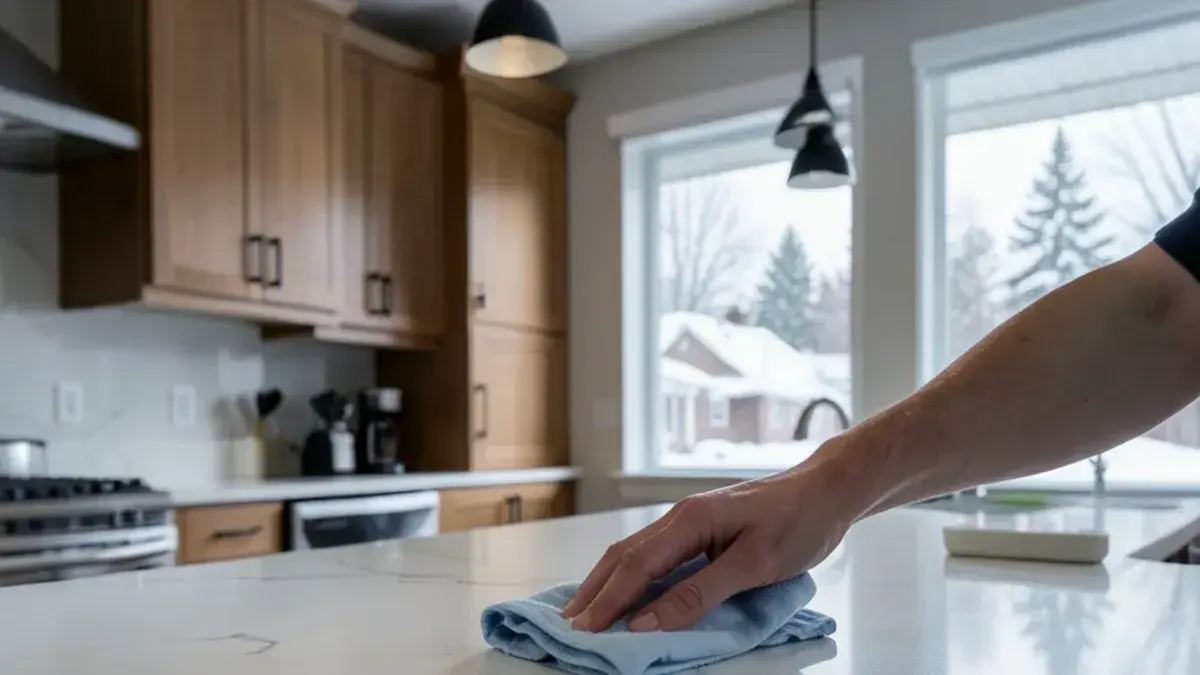
- Wipe spills promptly with a soft cloth and warm, soapy water, then dry.
- For dried-on food, soften it with water and lift it with a plastic scraper.
- Avoid oven cleaner, paint removers, concentrated bleach and highly alkaline degreasers.
- Skip abrasive pads and scouring powders, which can dull the polish over time.
- Check your quartz manufacturer's care guide for approved cleaners; terms vary by brand.
Questions about your own project? Call Nick at (810) 923-8792
Call Kitchen NV in Pinckney, Monday to Friday, 9 a.m. to 5 p.m. Design consultations are by appointment.
- ★ 5.0 on Google (28 reviews)
- MI Residential Builder #2101209269
- CMKBD · CAPS · CLIPP designer
- Serving since 2020
Does granite need sealing, and how often?
Most granites benefit from sealing, and the right interval varies slab by slab. A dense black or deep green granite can absorb so little that sealing rarely matters, while lighter, more open-grained stones can soak up oil and wine quickly. Rather than following a fixed calendar, test the surface.
Do the water test
Leave a spoonful of water on a heavily used spot, such as the counter beside the sink, for several minutes.
Read the result
A darker patch under the water means absorption, so it is time to reseal. Water that stays beaded on unchanged stone means the current sealer is holding.
Seal by the product directions
Clean and dry the counter, apply a penetrating stone sealer, wipe off the excess in the time the label specifies and let it cure.
For daily cleaning, a pH-neutral stone cleaner or mild soapy water works well. Vinegar and lemon-based sprays are a poor habit on any natural stone because acids can wear down sealer and dull some surfaces.
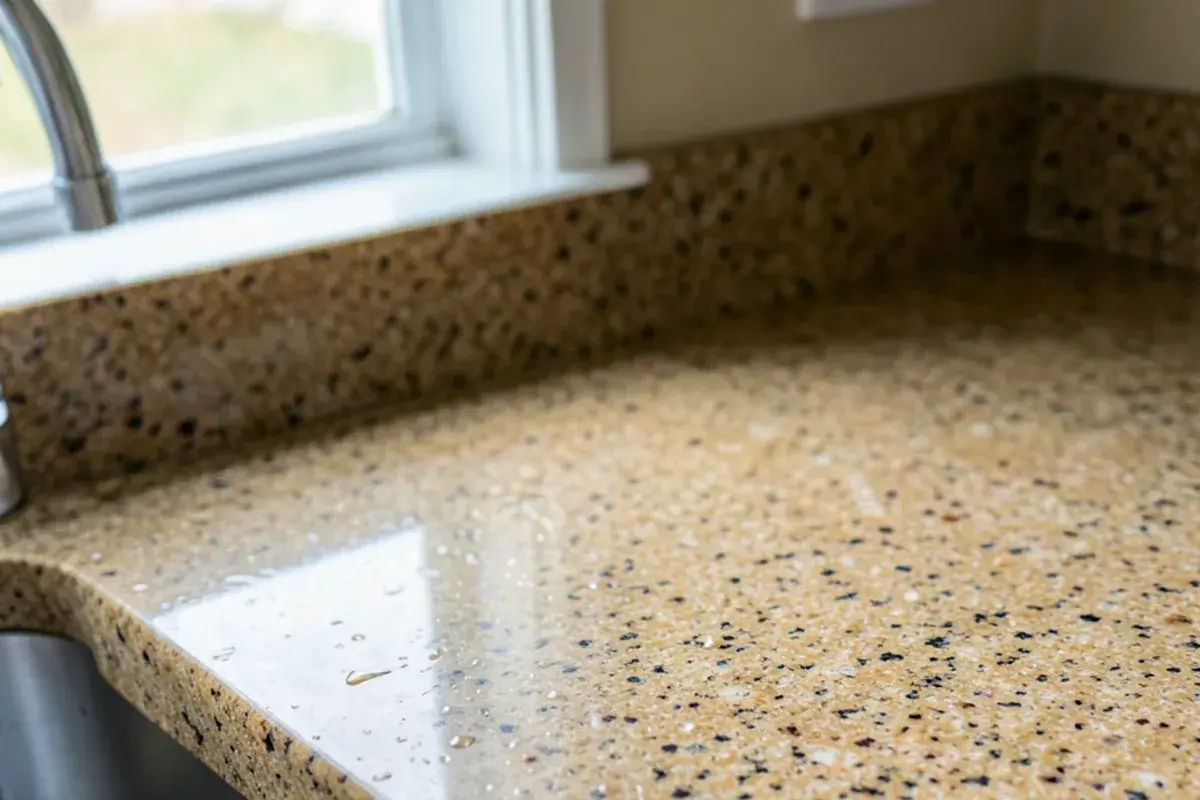
Why does quartzite care depend on what you bought?
True quartzite is a metamorphic stone formed from quartz sandstone. It is very hard and resists etching from acids. The trouble is that some stones sold as quartzite are partly or largely dolomite or marble, which are softer and will etch when lemon juice or wine sits on them.
Before you buy, ask for an offcut or sample and test it. A drop of lemon juice left for a few minutes should leave true quartzite unchanged; a dull spot means the stone etches. Many fabricators also do a glass scratch test, since genuine quartzite scratches glass. Once installed, quartzite care looks a lot like granite care: periodic sealing, pH-neutral cleaners and prompt cleanup.
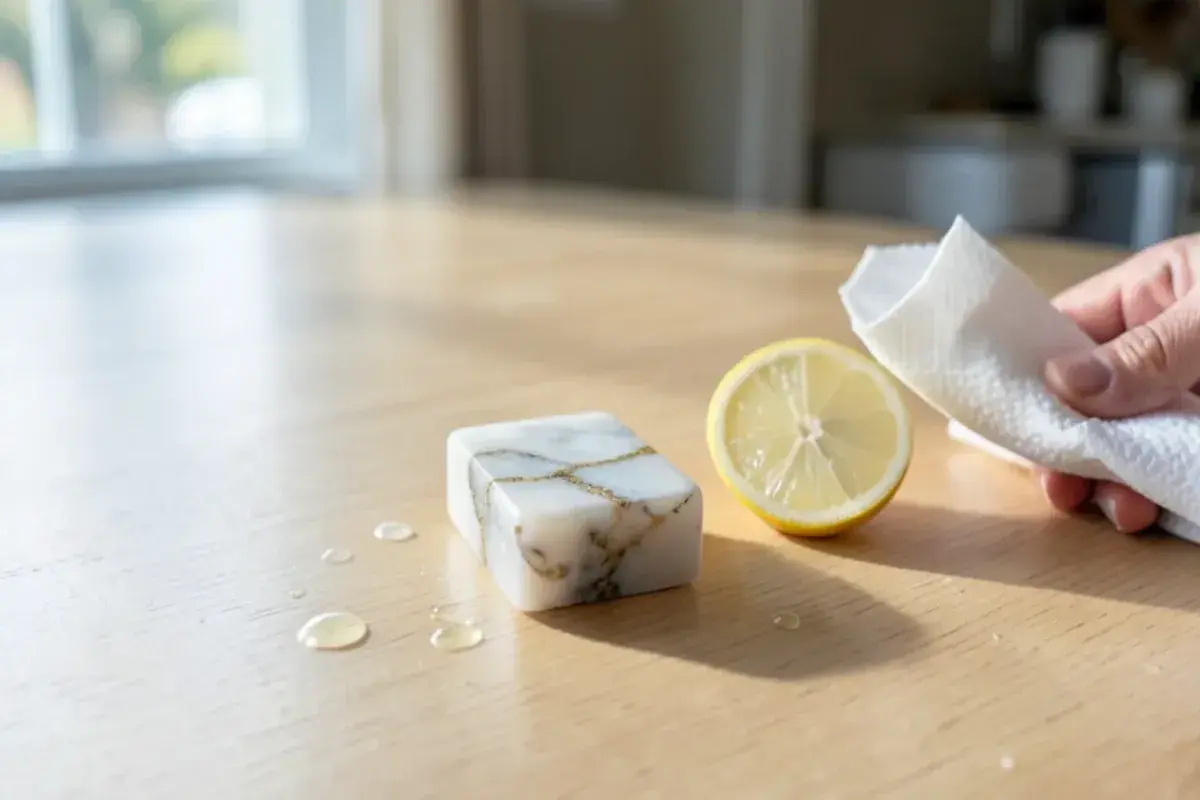
Which stains need which fix?
Stains in natural stone sit below the surface, so scrubbing harder only dulls the polish. The fix depends on what made the mark. Quartz rarely stains at all; when it does, the mark is usually on the surface and comes off with soap and a plastic scraper.
| Stain | What it looks like | Usual approach |
|---|---|---|
| Cooking oil or grease | Darker, circular patch that spreads | Absorbent poultice with a solvent suited to oil, left to dry and draw it out |
| Coffee, tea, wine, fruit | Pinkish-brown or tan mark | Poultice made with a peroxide-based cleaner on lighter stones; ask before using it on dark granite |
| Water rings | Gray or white ring near the sink or faucet | Often hard-water minerals on the surface; a stone-safe mineral remover, never vinegar |
| Etch mark | Dull spot with no color change | Not a stain; the polish is damaged and needs honing or polishing |
| Rust | Orange-brown mark under a can or cast iron | Hard to remove; call the fabricator before trying anything |
Water rings deserve a local note. Many homes around Livingston County draw from wells, and that hard water dries into a mineral film around faucets and along the sink edge. A softener or a quick dry after use keeps it from building up, and our well water kitchen fixtures guide covers the faucet side of the problem.
Quartz, granite and quartzite care compared
| Care point | Quartz | Granite | Quartzite |
|---|---|---|---|
| Everyday cleaner | Mild dish soap and water | pH-neutral stone cleaner or mild soap | pH-neutral stone cleaner or mild soap |
| Sealing | Never needed | Periodically, when the water test fails | Periodically, when the water test fails |
| Hot pans | Always use a trivet; resin can scorch | Trivet recommended to protect sealer and avoid thermal shock | Trivet recommended for the same reasons |
| Acids such as lemon or wine | Wipe up; generally resistant | Wipe up promptly; can dull sealer | True quartzite resists; dolomite blends can etch |
| Main watch-out | Harsh chemicals and heat | Oil stains on lighter stones | Mislabeled softer stone |
The first weeks after a new countertop goes in
- Ask the fabricator how long the seam epoxy and the sink adhesive need before the sink is loaded with heavy pots.
- If the installer sealed the stone on site, follow the sealer label's cure time before spills and cleaners.
- Keep the warranty and care sheet from the fabricator and, for quartz, the manufacturer; registration is sometimes required.
- Look along the undermount sink joint and the backsplash caulk line once a year; resealing a cracked caulk bead keeps water out of the cabinet.
- Clean the underside lip of an undermount sink, where soap scum and mildew collect out of sight.
Most problems that show up early are fit issues, not care issues: a seam that is not flush, a sink that drips at the rim, an overhang that flexes. Report those to the installer while the job is fresh rather than living with them.
Heat, knives and the habits that do the damage
Most countertop damage traces back to a handful of habits rather than to the material itself. Changing these protects any surface.
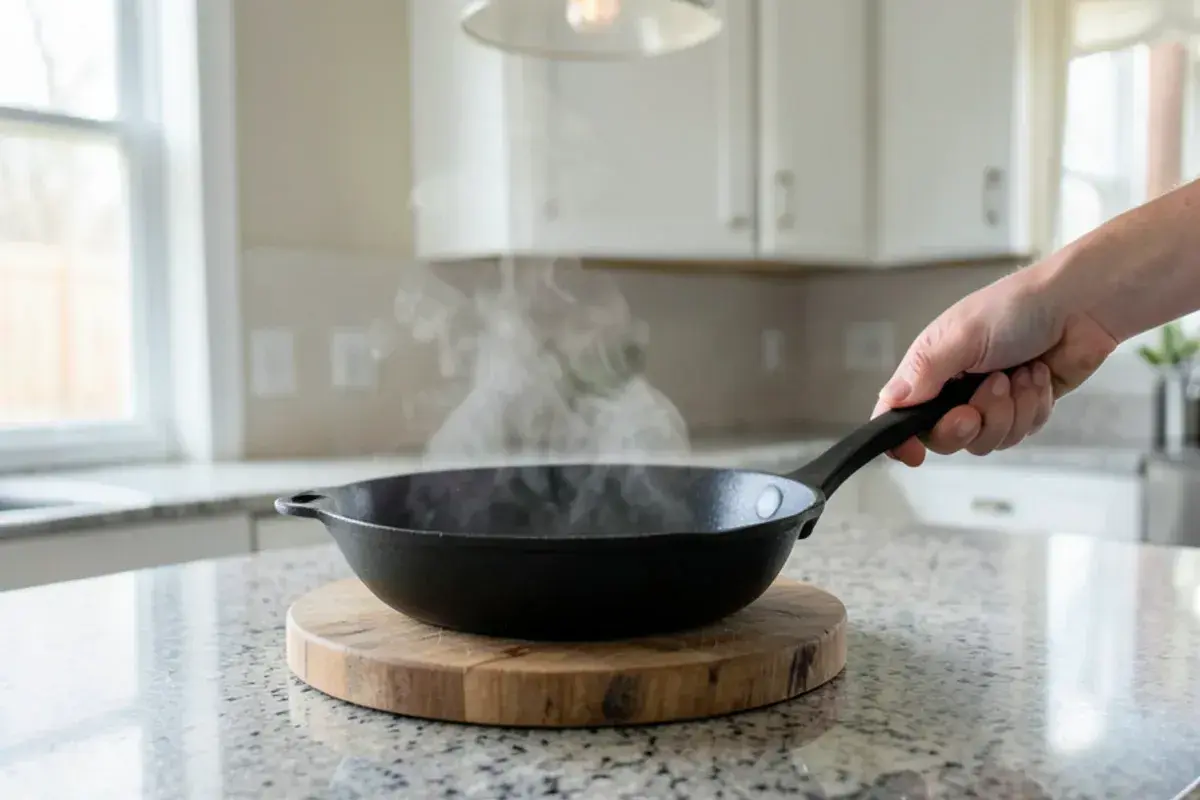
- Set pots, sheet pans, slow cookers and air fryers on trivets or boards, not directly on the counter.
- Cut on a cutting board; stone dulls knives, and quartz can show fine scratches.
- Do not stand or kneel on overhangs or near sink cutouts, where the stone is narrowest.
- Keep heavy objects from dropping onto edges and corners, the most common place for chips.
- Use coasters under wine, citrus drinks and oil bottles on natural stone.
If damage happens, small edge chips can usually be filled and polished by a stone fabricator with color-matched epoxy. An oil stain in granite can often be drawn out with a poultice. Etches in softer stone may need professional honing or polishing. Quartz scorch marks are harder to fix, which is why the trivet rule matters most there.
Nick on surfaces that still look new later
When I help clients choose a countertop, I ask how they really cook and clean, because care starts with matching the material to the household. Someone who never wants to think about sealing is usually happier with quartz. Someone who loves natural stone and does not mind a yearly water test will enjoy granite or quartzite for a very long time.
One trade-off is worth saying out loud: the easiest-care surface is not always the most forgiving one. Quartz never needs sealing, but a scorch mark is close to permanent. Granite asks for a little maintenance, yet most of its problems can be drawn out, filled or polished away.
With quartzite, I insist on testing a sample before a slab is reserved. The name on the rack is not enough, and a five-minute lemon test is far cheaper than finding out after installation. If you live in Novi or Brighton, ask for that test on an offcut while you are choosing slabs.

Nicholas Vanderhovel, CMKBD, CAPS, CLIPP
Owner and designer at Kitchen NV in Pinckney, MI, and a Michigan-licensed residential builder (#2101209269). About Nick
How to Care for Quartz, Granite and Quartzite Countertops: quick answers
Do quartz countertops need to be sealed?
No. Engineered quartz is non-porous because its crushed stone is bound with resin, so there is nothing for a sealer to penetrate. Sealing products can actually leave a film on the surface. Everyday care is soft cloth, warm water and mild soap. Ask for the manufacturer's care guide when you choose the slab, since approved cleaners vary between quartz brands.
How can I tell if my granite needs resealing?
Do a water test. Leave a small puddle of water on a busy area, such as near the sink, for several minutes. If the stone darkens, it is absorbing and needs sealer; if the water beads up, the existing sealer is still working. Lighter granites tend to need sealing more often than dense, dark stones, and the test settles it either way.
Can I put a hot pan on quartzite?
True quartzite tolerates heat well, but a trivet is still the safer habit. Sudden temperature changes can stress any stone, and heat can affect the sealer on the surface. If your slab is a dolomite blend sold as quartzite, it is softer overall, so protecting it matters more. Nick recommends a trivet near the range regardless of which stone you choose.
What removes an oil stain from granite?
A poultice usually works. A paste of absorbent powder mixed with a solvent recommended for oil stains is spread over the mark, covered and left to dry so it draws the oil back out of the stone. It may take more than one application. For stubborn or large stains, ask your fabricator, who can confirm the right method for that particular stone.
Quartz needs soap, water and protection from heat; granite and quartzite need the same plus a sealer whenever the water test says so. Add trivets and cutting boards to the routine and any of the three will hold up for decades.
If you are still choosing a countertop and want one that fits how you cook and clean, Nick can walk you through samples during finish selection. Call (810) 923-8792.
Related services and areas