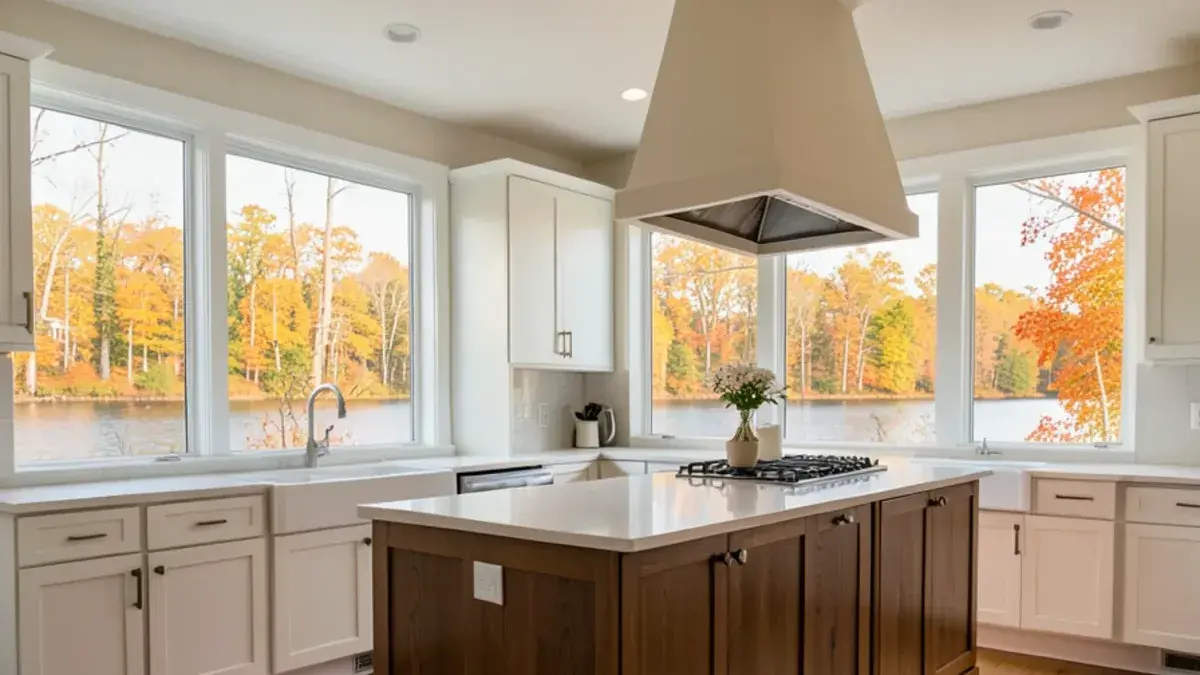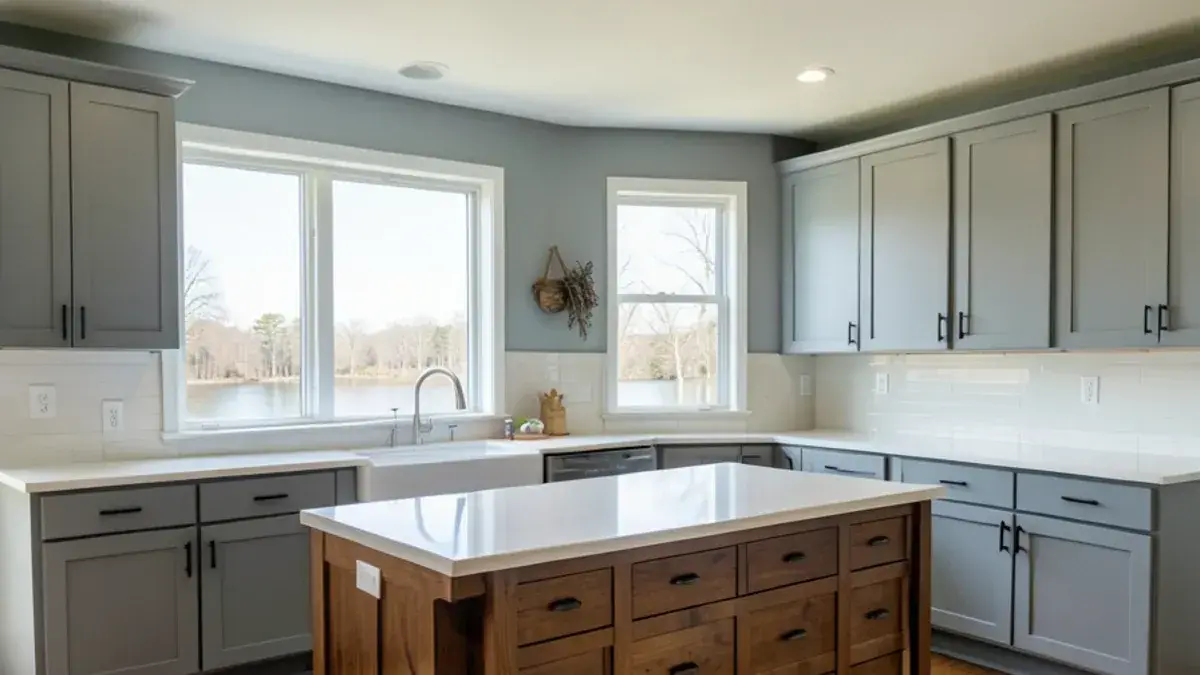
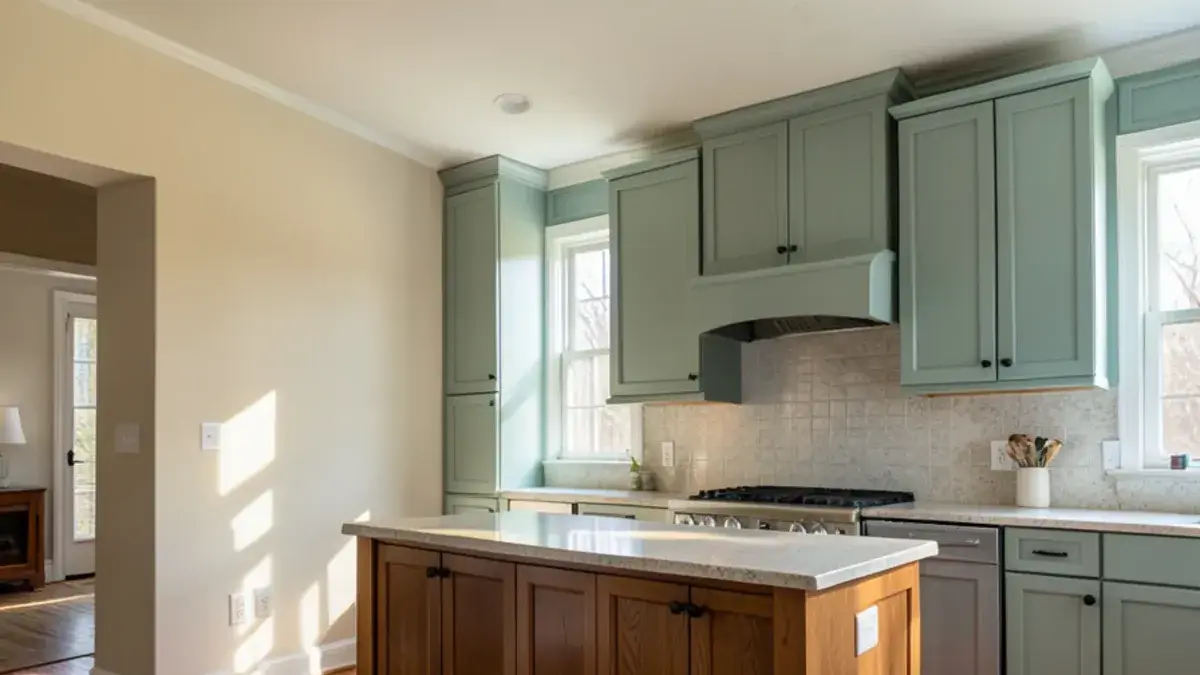
The main difference in the kitchen designer vs. big-box home-improvement store question is accountability for the whole room. An independent designer plans the space around your household, draws it for the trades and stays with it through installation; a store design desk is generally built to help you buy the cabinets and products that store sells.
Both can produce a kitchen. They suit different projects, budgets and homeowners. This post lays out how each one typically works, where the differences show up in the finished room, and when the store is honestly the right call. We will not name any retailers; the points apply to the category as a whole.
How does big-box store kitchen design usually work?
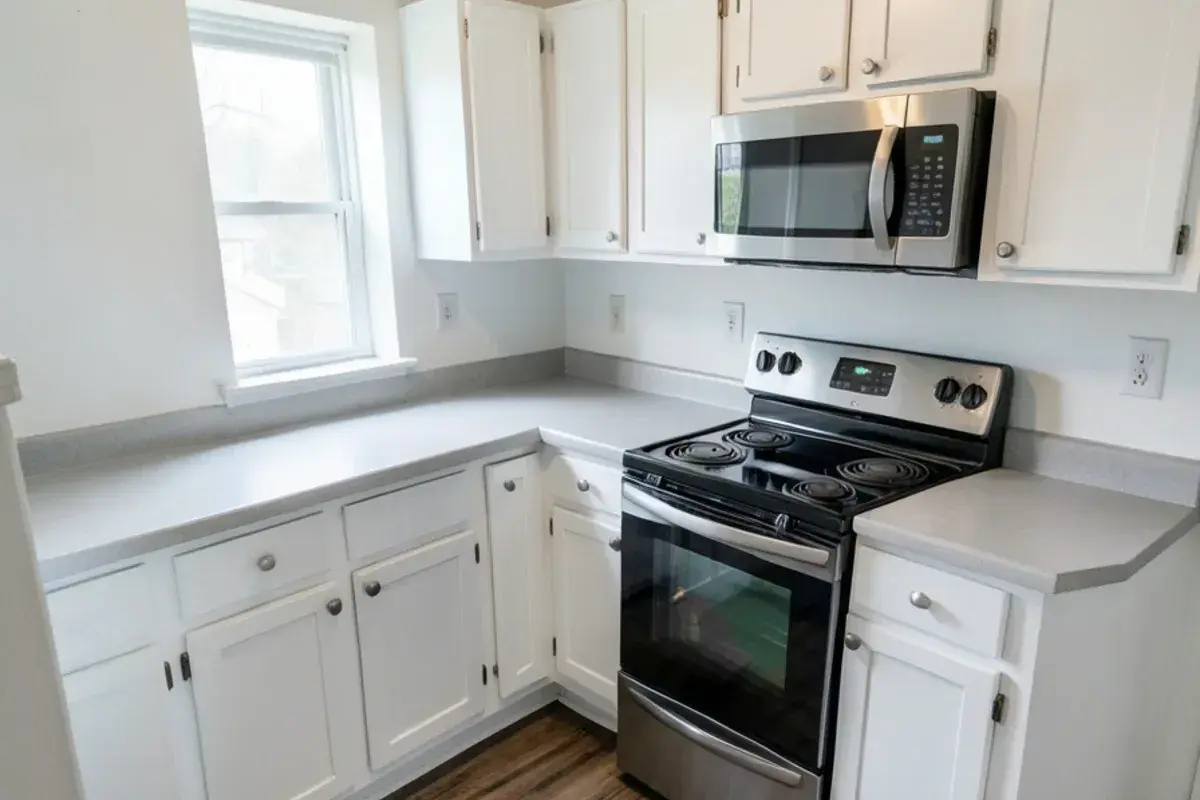
Most large home-improvement retailers offer kitchen design as a way to sell cabinetry. You book an appointment, a design associate builds a layout in the store’s planning software using the cabinet lines that store carries, and you receive a rendering and a price. Measurement and installation are often handled through a separate program or subcontractor.
That model can work well for straightforward projects. Its limits come from the structure, not the people: product choice is tied to what the store stocks, training and credentials vary widely from one associate to the next, and the person who drew the plan is not always involved once installation starts.
Questions about your own project? Call Nick at (810) 923-8792
Call Kitchen NV in Pinckney, Monday to Friday, 9 a.m. to 5 p.m. Design consultations are by appointment.
- ★ 5.0 on Google (28 reviews)
- MI Residential Builder #2101209269
- CMKBD · CAPS · CLIPP designer
- Serving since 2020
What changes with an independent certified kitchen designer?
An independent designer is paid to plan your kitchen, not to move a particular product. At Kitchen NV, that means Nick Vanderhovel, an NKBA Certified Master Kitchen & Bath Designer, handles the project from the first interview through installation. In practice the differences look like this:
- Layout before product. Nick explores how you cook, store and gather, then tests several arrangements before choosing cabinets to fit them.
- Wider cabinetry options. Cabinet design is our specialty, including furniture-grade cabinetry, so the boxes fit the plan rather than the other way around.
- Complete drawings. Elevations, installation drawings, lighting and tile plans go to the trades, not just a rendering.
- Coordination through installation. We place the cabinet order ourselves, and the same designer who drew the plan is the one answering the phone while the trades build it.
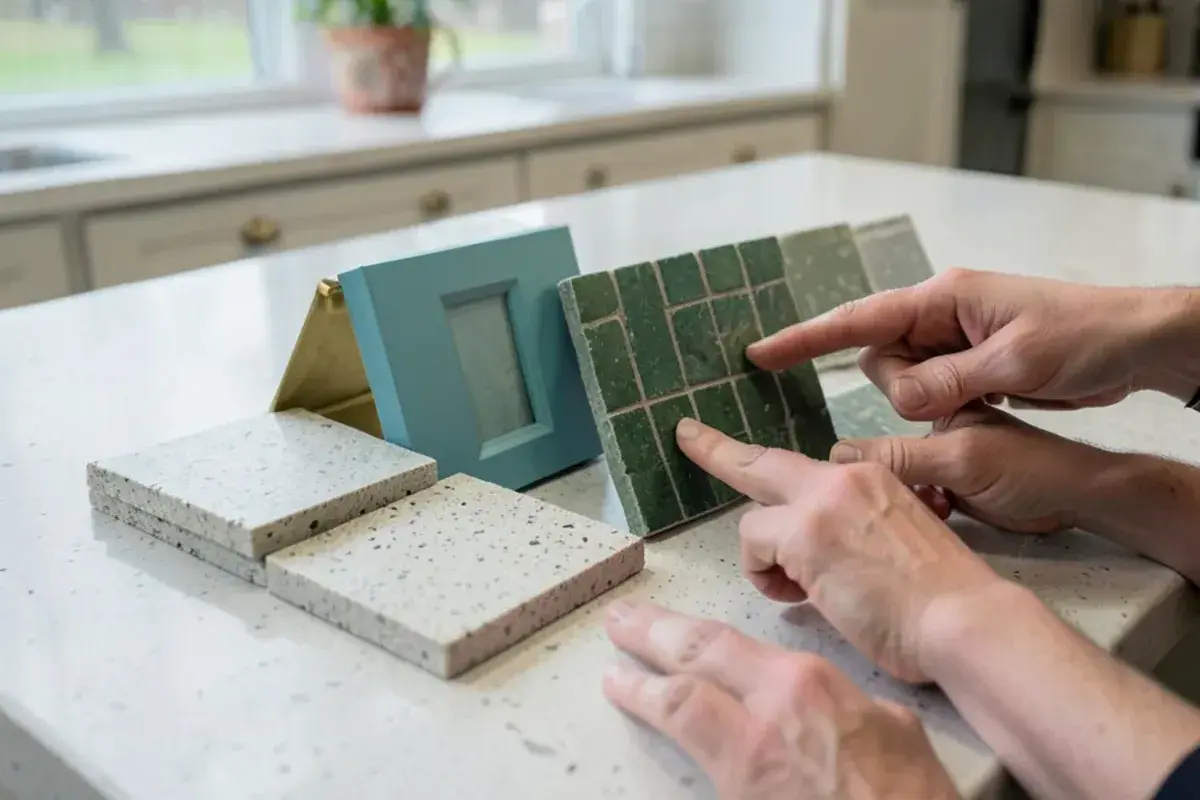
- Help beyond cabinets. Countertops, fixtures, lighting, flooring, tile and hoods can be selected together, with samples brought to your home.
A kitchen design consultation is where that process starts, and it is the easiest way to see whether the approach fits your project.
Side by side: kitchen designer vs. big-box store design desk
| Factor | Big-box store design desk | Independent designer |
|---|---|---|
| Who designs | Store associate; training varies | Designer whose business is design; credentials can be verified |
| Product range | Cabinet lines the store carries | Cabinetry chosen to suit the plan |
| Drawings | Floor plan and rendering, often limited detail | Floor plans, 3D views, elevations and installation drawings |
| Selections | Usually limited to store inventory | Counters, tile, fixtures, lighting and hoods coordinated together |
| Installation | Often a separate program or subcontractor | Designer coordinates partner contractors and stays involved |
| Point of contact | Can change between design, order and install | One designer from first meeting to finished room |
Your own experience may differ by store and by associate. The table reflects the typical structure of each model rather than any single company.
When is a big-box store the right call?
We would be doing you a disservice to suggest every kitchen needs an independent designer. A store design desk can be a sensible choice when:
- You are replacing cabinets in the same layout with no wall, plumbing or electrical changes.
- The project is a small laundry room, rental unit or basement kitchenette with simple needs.
- You plan to install stock cabinets yourself and mainly need a parts list.
- Budget is the deciding factor and you are comfortable coordinating trades on your own.
An independent designer tends to earn the fee when the layout is changing, the house has quirks, several trades are involved, or the kitchen is a long-term investment. Plenty of kitchens around Brighton and Ann Arbor fall somewhere in between, which is why it helps to ask questions of both before deciding.
How do you compare cabinet quality from either source?
Price tags and door styles make two cabinet lines look comparable when they are not. Whichever route you take, open a sample drawer and ask the same construction questions. The answers say more about how the kitchen will hold up than the brand on the box.
| Detail | What to ask | Why it matters |
|---|---|---|
| Box material | Plywood or particleboard sides, and how thick? | Particleboard swells when a sink leak goes unnoticed; plywood shrugs off minor moisture better |
| Drawer boxes | Dovetailed solid wood, or stapled sides? | Heavy pots in deep drawers punish weak joints first |
| Slides and hinges | Full-extension, soft-close, rated for what weight? | Drawers replace base shelves in most modern plans, so the hardware works hard |
| Finish | Factory catalyzed finish, or painted after assembly? | Factory finishes resist the steam and cleaners near a range and sink |
| Sizing | Widths in 3-inch steps only, or modifiable depth and height? | Older homes with out-of-square walls need fillers, scribes and modified boxes |
| Certification | Is the line KCMA certified? | Third-party testing of structure, doors, drawers and finish |
That last row is a useful shortcut. The Kitchen Cabinet Manufacturers Association says cabinets carrying its A161.1 quality seal have passed 14 tests, including a 600-pound load test, and that certified lines exist at every price point from builder grade to custom. A store line can pass; a custom shop can skip it. Ask either source and check the KCMA directory. Our guide to kitchen cabinets explains how stock, semi-custom and custom construction differ.
If you use a store design desk, protect the plan before you order
Choosing the store is a reasonable decision for the right project. A few checks before you sign the order keep its weak spots from becoming your problem:
- Measure the room yourself and compare against the plan, wall by wall, including window trim and the ceiling height.
- Get the exact appliance models and cutout dimensions into the plan, not just generic 30-inch openings.
- Ask how the range hood will vent outdoors and where the duct will run before the cabinet above it is ordered.
- Confirm which order items are custom-made and whether they can be returned or exchanged.
- Ask who pulls the building, electrical and plumbing permits, and for the installer’s Michigan license number if the job tops $600.
- Get the lead time in writing so demolition is not scheduled ahead of delivery.
Which questions reveal the real difference?
- Who will measure the room, and will that same person draw the plan?
- What drawings will the installer and countertop fabricator receive?
- Which cabinet lines can you offer, and why do you recommend this one for my room?
- Who manages problems once installation starts, and how do I reach them?
- What credentials does the designer hold, and where can I verify them?
- Where does warranty coverage come from? It should come from the manufacturers and the installing contractor, with written terms before ordering.
Ask the same list at the store and of any independent kitchen designer you interview. Comparing the answers usually makes the choice clear.
Nick on choosing between the two
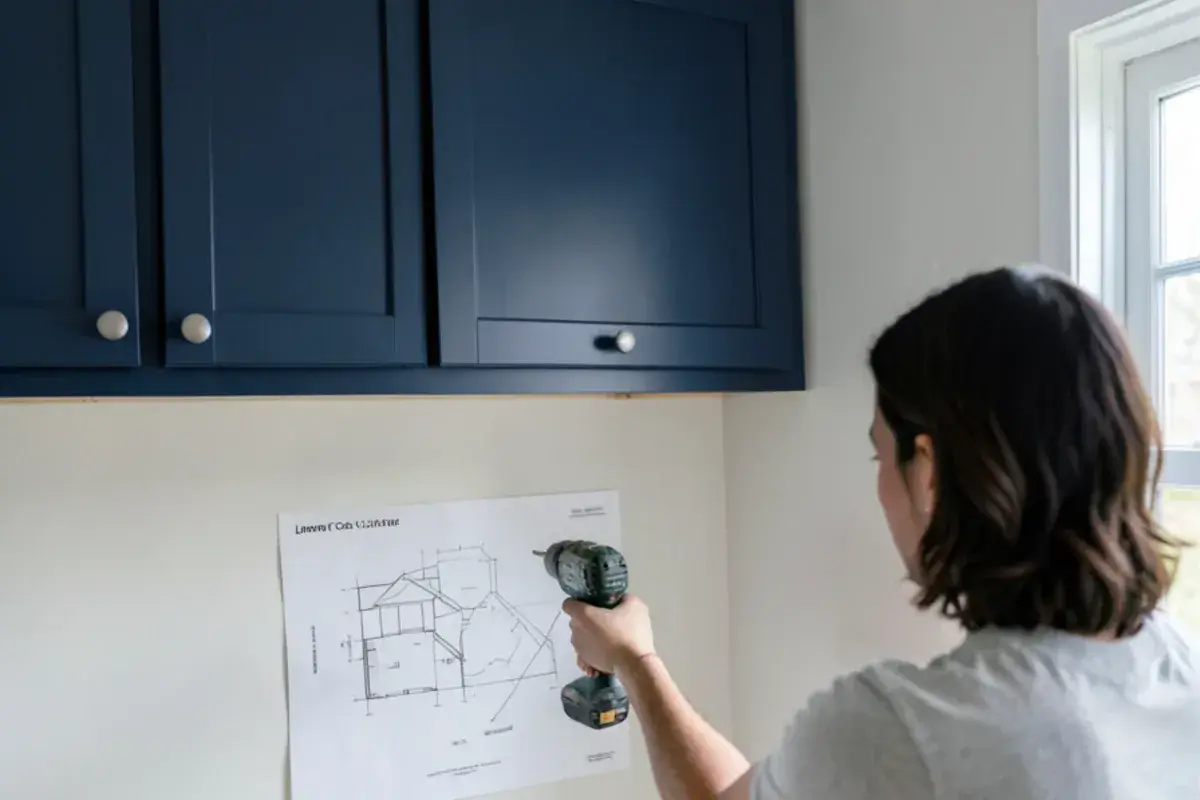
I have no quarrel with store design desks. For a simple cabinet swap in the same footprint, they can make a lot of sense. Where I see trouble is when a complicated remodel gets treated like a simple one: walls moving, plumbing relocating, an older house that is out of square, all planned in an hour with whatever boxes are in the catalog.
What I offer is time and accountability. I measure the room myself, I draw every elevation, and when something comes up during installation, homeowners call me. For a kitchen people expect to live with for many years, I think that continuity is worth a great deal.

Nicholas Vanderhovel, CMKBD, CAPS, CLIPP
Owner and designer at Kitchen NV in Pinckney, MI, and a Michigan-licensed residential builder (#2101209269). About Nick
Kitchen Designer vs. Big-Box Store Design: quick answers
Is an independent kitchen designer more expensive than a big-box store?
Not necessarily overall. An independent designer usually charges a design fee, while store design is often folded into the cabinet price. The total depends on the cabinetry, the scope and how well the plan prevents mistakes during construction. At Kitchen NV, a design retainer starts the work and cabinetry is priced separately, so you can compare each piece clearly.
Can I take a store design to an independent designer?
Yes, as a starting point. A layout from any source shows what you like and what you want to avoid. An independent designer will still measure the room, test the plan against how you use the kitchen and produce full drawings. You are welcome to bring a store plan to a first meeting with Nick, whether you live in Brighton, Ann Arbor or closer to Pinckney.
Do big-box stores employ certified kitchen designers?
Some associates hold industry credentials and many do not; it varies by store and person. If certification matters to you, ask directly and verify the answer on the NKBA website. Nick Vanderhovel is an NKBA Certified Master Kitchen & Bath Designer and works independently from Kitchen NV’s Pinckney studio rather than for any retailer.
Big-box store design suits simple, same-footprint projects where the homeowner is comfortable coordinating the work. An independent certified designer earns the fee when the layout changes, the house is complicated, or you want one accountable person from plan to installation.
If you are weighing the two for your own kitchen, Nick will talk it through honestly by phone at (810) 923-8792, including whether your project actually needs him.
Sources
- KCMA Cabinet Certifications — Kitchen Cabinet Manufacturers Association
- Occupational Code (excerpt), Act 299 of 1980, Article 24 — MCL 339.2403 — Charter Township of Ypsilanti Building Department
Related services and areas