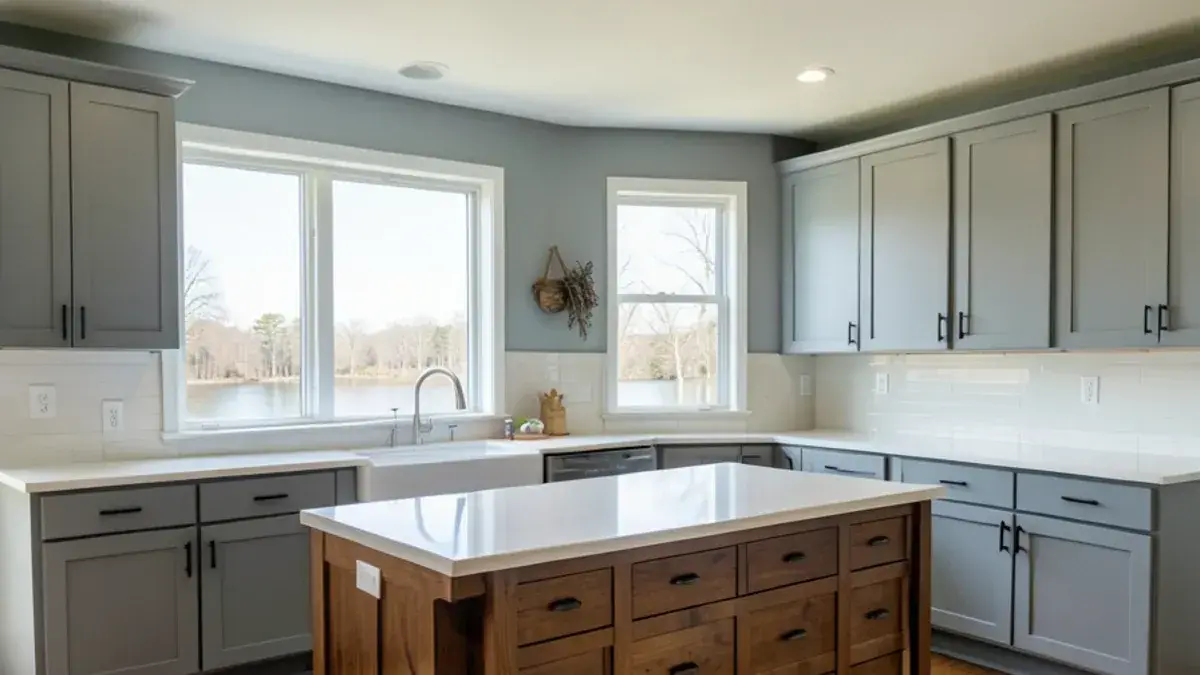
Open shelving vs upper cabinets is really a trade between openness and storage. Shelves make a wall feel lighter and keep everyday dishes within reach, but they hold less, collect dust and grease, and look tidy only if you keep them that way. Upper cabinets store more, hide clutter and protect their contents, at the cost of a heavier wall.
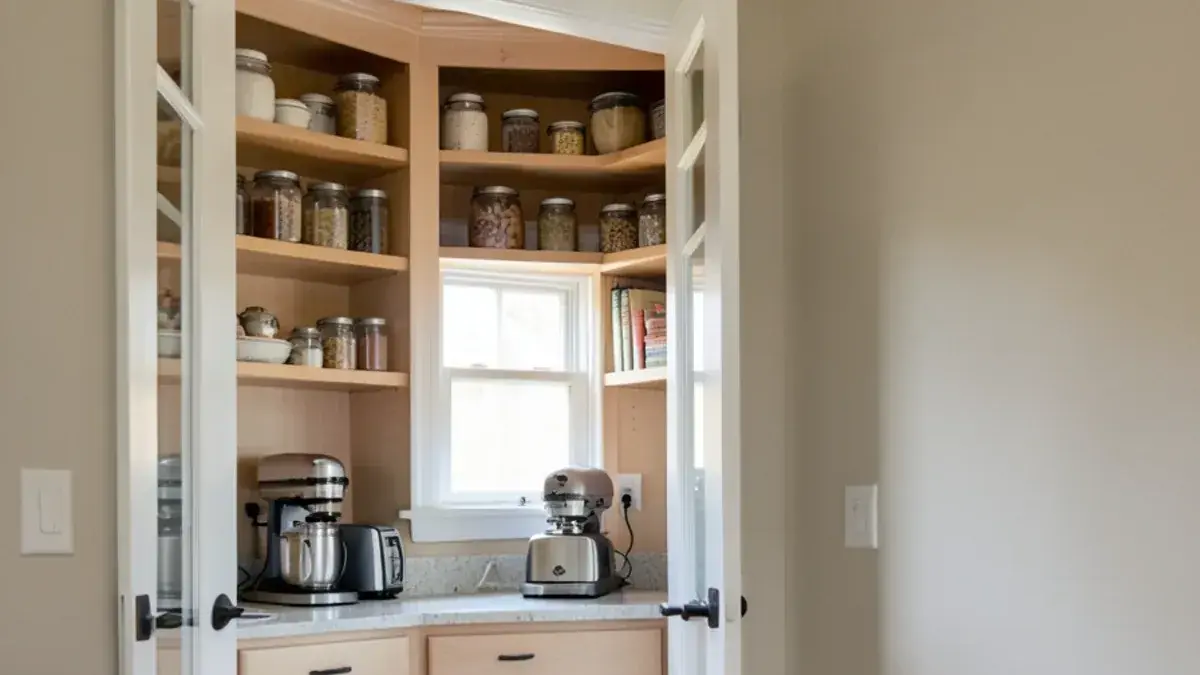
Plenty of kitchens land somewhere in between: closed storage where it works hardest, and a short run of shelves where it adds light or display. If you are giving up uppers, the storage has to go somewhere, and a planned pantry storage wall is often where it ends up.
How much storage do you lose with open shelving?
More than most people expect. An upper cabinet usually holds two or three adjustable shelves behind a door, plus the space up to the ceiling if the cabinets run tall. A floating shelf holds one layer of items, and only the ones you are comfortable displaying. Replacing a full wall of uppers with two shelves can remove a large share of a kitchen's closed storage.
That loss is manageable when the base cabinets are planned around it. Deep drawers for plates and bowls, a tall pantry cabinet and a drawer for glasses can absorb what the uppers used to hold, and drawers are easier to reach than a high shelf anyway.
Questions about your own project? Call Nick at (810) 923-8792
Call Kitchen NV in Pinckney, Monday to Friday, 9 a.m. to 5 p.m. Design consultations are by appointment.
- ★ 5.0 on Google (28 reviews)
- MI Residential Builder #2101209269
- CMKBD · CAPS · CLIPP designer
- Serving since 2020
Will open shelves get greasy and dusty?
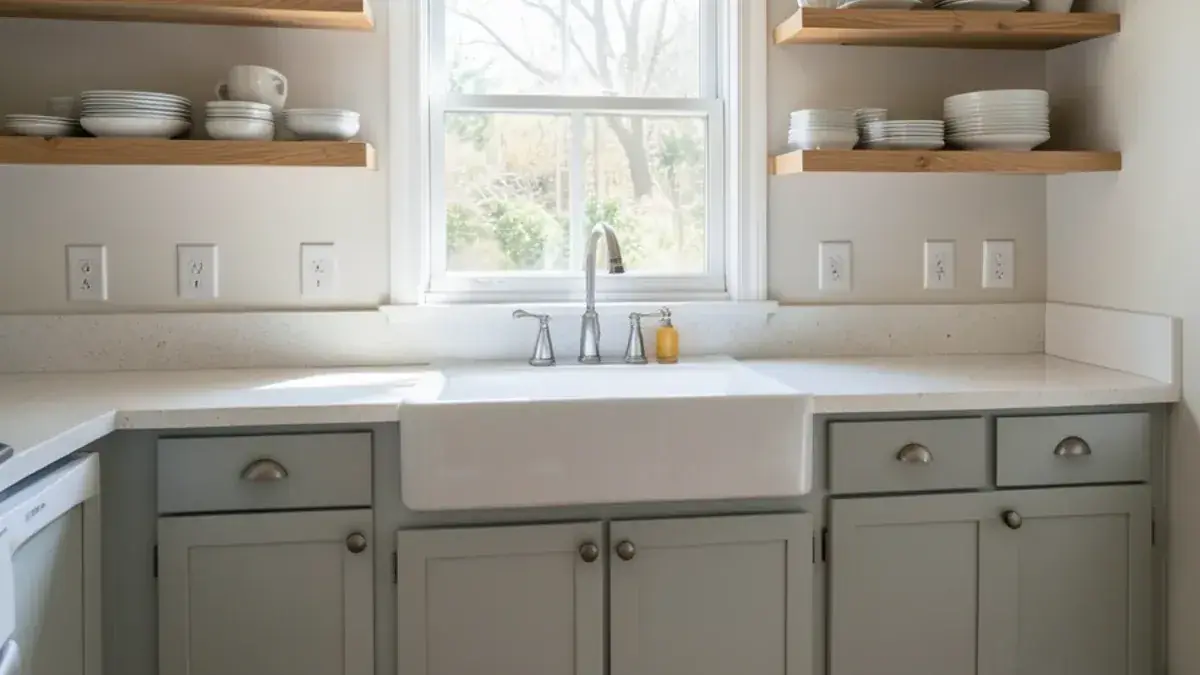
Yes, to a degree, and location decides how much. Cooking vapor carries fine grease that settles on nearby surfaces, so shelves right beside the range collect a sticky film that dust then clings to. Shelves on a wall away from the cooktop, or flanking a window over the sink, stay much cleaner.
- Items used daily, like the plates and glasses you run through the dishwasher, rarely get dusty because they never sit long.
- Display pieces used a few times a year will need regular washing or wiping.
- A strong, well-sized range hood reduces how far grease travels, which helps any open storage in the room.
Open shelving and upper cabinets at a glance
| Consideration | Open shelving | Upper cabinets |
|---|---|---|
| Storage capacity | One visible layer per shelf | Multiple shelves behind doors, often to the ceiling |
| Dust and grease | Exposed; worst near the range | Contents protected |
| Look | Light, open, shows tile and windows | Clean and continuous; hides clutter |
| Daily upkeep | Needs styling and regular wiping | Wipe doors occasionally |
| Wall prep | Blocking or heavy brackets, tile runs higher | Standard cabinet mounting |
| Flexibility later | Easy to restyle | Fixed once installed |
Planning floating shelves: blocking, brackets and tile
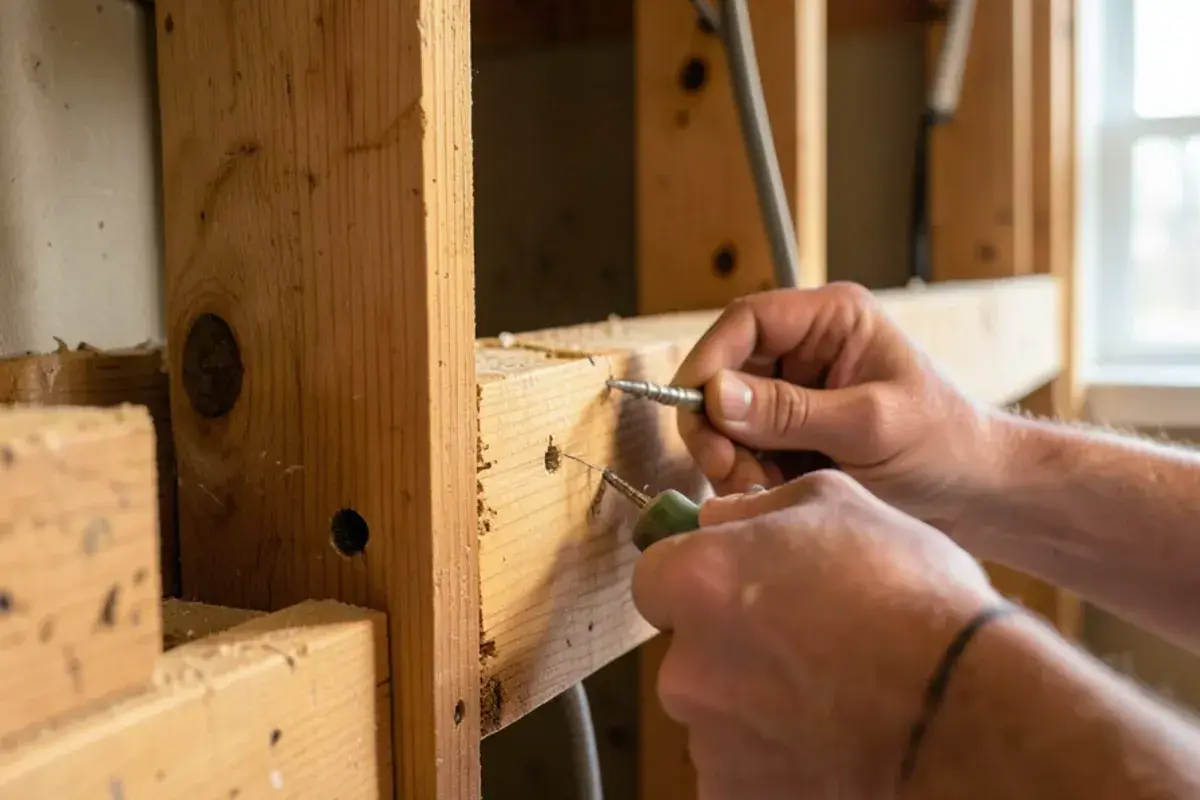
A thick floating shelf full of stoneware is heavy, and its strength comes entirely from what holds it to the wall. Concealed steel brackets or rods need to anchor into studs or into solid wood blocking added between studs. Blocking is easiest to install when the wall is open, which is why shelves should be decided during design, before drywall and tile go up.
Pick shelf locations early
Mark them on the elevations so the framing crew knows where blocking belongs.
Choose brackets rated for the load
Follow the bracket maker's rating and spacing, and plan for the heaviest items you will store.
Run the tile higher
Without uppers, backsplash tile usually continues to the ceiling or a clear stopping line, which adds tile to the budget.
Plan the lighting
Undercabinet lights disappear with the uppers, so task lighting has to come from shelf-integrated strips or ceiling fixtures.
Which shelf material and depth should you choose?
Start with the largest thing the shelf will hold. Measure your biggest dinner plate or serving bowl, then size the shelf slightly deeper so nothing hangs over the edge where a sleeve can catch it. Shelves much deeper than that start to cast a shadow on the counter and collect items that get pushed to the back and forgotten.
- Solid hardwood such as white oak or walnut suits a thick floating profile, but it moves with the seasons; a shelf glued up from several narrow boards stays flatter than one wide plank.
- Plywood or a hollow torsion box faced with veneer resists sagging over a long span and weighs less on the brackets.
- MDF paints smoothly but sags over time under a load of stoneware, so it suits short spans and light display pieces.
- Stone ledges cut from the countertop slab tie into a slab backsplash and wipe clean easily, though they need stronger anchoring than wood.
Finish matters as much as species. A wipeable sealed finish handles kitchen grease far better than a raw or lightly oiled board, which absorbs splatter and darkens unevenly over time. Span matters too: the farther a shelf runs between supports, the more it bends, so long runs need closer bracket spacing or a stiffer core.
What belongs on open shelves, and what should stay behind doors?
- Everyday plates, bowls and glasses that cycle through the dishwasher several times a week.
- Mugs and coffee gear at a beverage station, close to where they are used.
- Cookbooks and heavier pieces on the lowest shelf, where the load and the reach are both easiest.
- Keep oils, spices and anything sticky off shelves near the cooktop; heat shortens their life and the bottles collect grease.
- Keep rarely used serving pieces, food storage containers and small appliances in closed storage, where they do not need dusting.
Lighting changes how shelves read at night. Shelves with an integrated LED strip, or a ceiling fixture aimed at the wall, replace the task light that undercabinet fixtures used to give the counter below, a detail worth working through in kitchen lighting design before the electrician roughs in.
Middle-ground layouts that blend both
You do not have to choose one approach for the whole room. Some of the most practical kitchens combine them.
- Uppers on the cooking wall, shelves on the sink or coffee wall.
- A single shelf across a window or a stretch of tile instead of a full run.
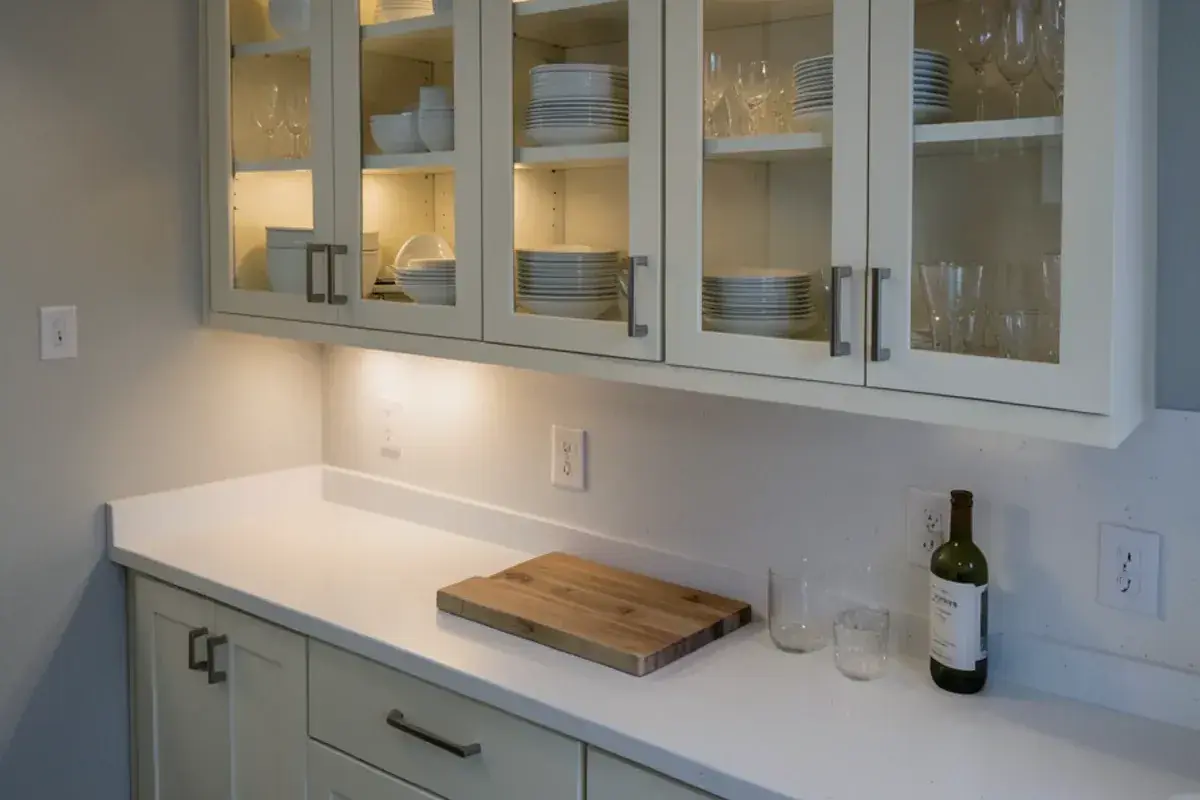
- Glass-front uppers for display with dust protection.
- Closed uppers everywhere, plus open shelving at the end of the island or in a beverage area.
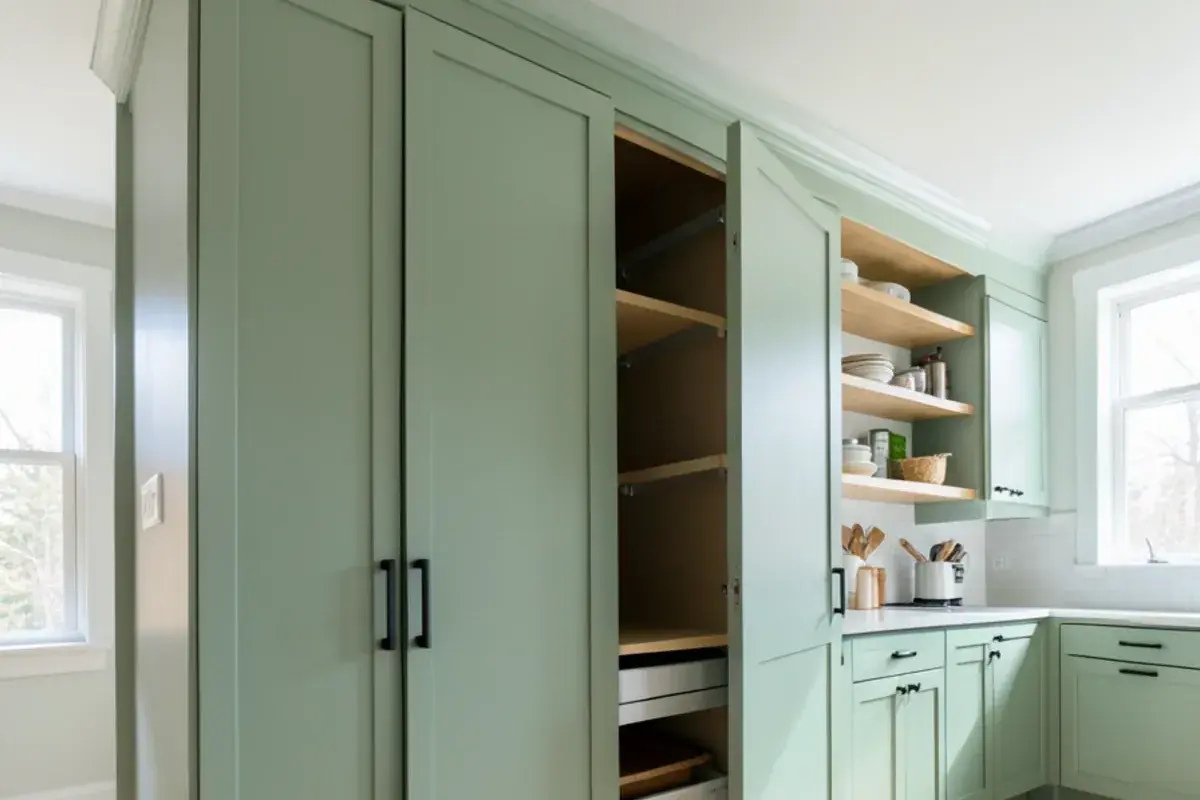
- No uppers at all, with a full-height pantry wall carrying the storage.
In older homes in Dexter and newer builds around South Lyon alike, the deciding factor is usually the same: how much the household owns and how much of it they want to see. The overall kitchen cabinets plan should account for every dish before any uppers come off the drawings.
Nick on when shelves earn their place
I like open shelves, but I like them most where they solve something: a window that deserves to breathe, a tile wall that should be seen, a coffee station where the mugs get used every morning. I am far less enthusiastic about shelves next to a range, because I know what they will look like six months in.
The trade-off people underestimate is the backsplash. Pull the uppers and the tile becomes the wall, so it has to run higher and look good across a much bigger area. That is often where the budget saved on cabinet boxes goes.
Before I take uppers off a plan, I count. Plates, bowls, glasses, serving pieces, small appliances. If the base cabinets and pantry cannot hold it all, the shelves end up overloaded and the room looks cluttered instead of open. Storage first, then style.

Nicholas Vanderhovel, CMKBD, CAPS, CLIPP
Owner and designer at Kitchen NV in Pinckney, MI, and a Michigan-licensed residential builder (#2101209269). About Nick
Open Shelving vs. Upper Cabinets: quick answers
How much weight can a floating kitchen shelf hold?
It depends on the bracket and how it is anchored, so the bracket manufacturer's rating is the number to follow. Concealed brackets fastened into studs or solid blocking can carry stacks of dishes; the same shelf held only by drywall anchors cannot. Nick marks shelf locations on the elevations so blocking goes in while the walls are open.
Can I add open shelves to my existing kitchen?
Yes, if you can find studs where the shelves need to go or are willing to open the wall for blocking. Removing existing uppers also exposes unfinished wall and the edge of the old backsplash, so plan on patching, painting or extending tile. That repair work is often a larger job than the shelves themselves, and it is worth pricing before you commit.
Should open shelving go next to the range?
Usually not. Cooking vapor deposits grease on nearby surfaces, and shelves beside the range need cleaning far more often than shelves elsewhere. If you love the look on the cooking wall, a strong hood helps, and limiting those shelves to items you use daily keeps them from turning sticky. A sink or beverage wall is generally the better spot.
Do kitchens without upper cabinets hurt resale?
Not on their own, but a kitchen that clearly lacks storage can. Buyers open doors and drawers, and a room with a few shelves and too little closed storage reads as small. If the plan replaces the uppers with deep drawers and a tall pantry, most buyers see an open, well-organized kitchen. Nick checks the storage count on the floor plan before any uppers come off.
Open shelving works when storage has a home elsewhere and the shelves sit away from cooking grease. Upper cabinets remain the practical default for busy kitchens with a lot to store.
To plan the balance for your own kitchen, Nick can map storage, shelf locations and lighting together in the design. The number is (810) 923-8792.
Related services and areas