In the quartz vs granite vs quartzite decision, the quick version is this: quartz is the low-maintenance, consistent-looking choice; granite is the durable natural stone with the widest range of colors and prices; quartzite gives a marble-like look with more hardness, usually for more money. The right pick depends on how you cook, clean and want the room to look.
The table below compares them point by point. For more on each material, see our pages on quartz countertops, granite countertops and quartzite and marble countertops.
How are quartz, granite and quartzite made?
They sound alike, but only two come out of the ground as slabs. Quartz countertops are engineered in a factory from ground quartz mixed with resin and pigment, then pressed and cured. Granite is an igneous rock that cooled from magma, a mix of minerals such as feldspar, quartz and mica, which gives it its speckled, crystalline look. Quartzite began as quartz sandstone and was transformed by heat and pressure into a dense metamorphic stone, often with flowing veins.
That origin explains nearly every difference that follows. Resin makes quartz non-porous but sensitive to heat. Granite's mix of minerals makes it tough but somewhat porous. Quartzite's fused quartz grains make it very hard, though some stones sold under the name are not pure quartzite.
Questions about your own project? Call Nick at (810) 923-8792
Call Kitchen NV in Pinckney, Monday to Friday, 9 a.m. to 5 p.m. Design consultations are by appointment.
- ★ 5.0 on Google (28 reviews)
- MI Residential Builder #2101209269
- CMKBD · CAPS · CLIPP designer
- Serving since 2020
Quartz vs. granite vs. quartzite side by side
| Factor | Quartz (engineered) | Granite | Quartzite |
|---|---|---|---|
| Origin | Factory-made from quartz and resin | Natural igneous stone | Natural metamorphic stone |
| Hardness | Very hard; resin is the weak point | Hard, about 6 to 6.5 on the Mohs scale | Very hard, about 7 on the Mohs scale |
| Porosity and sealing | Non-porous; no sealing | Varies; periodic sealing | Varies; periodic sealing |
| Heat | Resin can scorch or discolor | High tolerance | High tolerance |
| Acid etching | Resists | Resists for most granites | True quartzite resists; dolomite blends can etch |
| Look | Consistent color and pattern | Speckled or veined, wide color range | Marble-like veining, often light tones |
| Slab variation | Minimal; samples match the slab | High; choose slabs in person | High; choose slabs in person |
| Outdoor or sunny use | Some products can fade in UV | Suitable | Suitable |
| Relative cost | Moderate to high | Moderate to high, wide range | High |
Which countertop handles heat and hard use?
For pure toughness, natural stone has the edge on heat. Granite and quartzite formed under extreme temperatures, so a warm pan is unlikely to hurt the stone itself, though a trivet still protects the sealer and avoids sudden thermal stress. Quartz handles daily use extremely well but is the most heat-sensitive of the three, because the resin binder can scorch.
For stains, quartz wins outright. It needs no sealing, and spills sit on the surface. Granite and quartzite resist stains well when sealed, and lighter natural stones need more attention than dark ones. For scratches and chips, all three are hard enough for normal cooking; edges and corners are where chips happen, regardless of material.
How can you tell real quartzite from marble at the stone yard?
Trade names are not geology. A slab labeled quartzite can be a true quartzite, a dolomitic marble or something in between, and the label alone will not tell you how it behaves around lemon juice and wine. Three simple tests on a sample or an offcut from the same slab settle most questions.
Scratch a glass tile
Drag a sharp corner of the sample firmly across a piece of glass. True quartzite bites in and leaves a scratch; marble and dolomite skate across it. Try several spots, because some stones vary within one slab.
Run an etch test
Put a small puddle of vinegar or lemon juice on the polished face for several minutes, wipe it away, then look at the spot at a low angle against the light. A dull mark means the stone etches, which is how marble behaves.
Check absorption
Set a few drops of water on an unsealed area and watch whether the stone darkens. Fast darkening tells you the slab will need more frequent sealing.
Ask for the results in writing
If the supplier or fabricator ran the tests, note the slab number and the outcome on your selection sheet.
None of this makes a dolomitic stone a bad countertop; it just means you should buy it knowing it may etch. Our countertop care guide covers how each material is cleaned and sealed once it is installed.
Seams, slab size and the edges you will touch every day
Material choice also decides where the seams go. Quartz comes in consistent slab sizes, and its uniform pattern lets a fabricator hide a seam fairly well. Granite and quartzite slabs vary in size by quarry, and on a bold vein the seam has to be planned so the pattern lines up or breaks somewhere sensible, such as at the sink or cooktop.
- Long islands may need a seam on natural stone; ask for a layout drawing showing exactly where it falls before cutting.
- Eased and slightly rounded edges chip less than a sharp square edge on all three materials.
- Mitered thick edges look like a solid block but add fabrication time and expose a joint to wear.
- Corners near the sink and dishwasher take the most knocks from pots and plates, so radius those first.
A safety note that belongs on the fabricator, not in your kitchen: cutting engineered quartz releases fine crystalline silica dust, and federal workplace safety agencies have warned about silicosis among stone fabrication workers. Once installed, the counter does not release dust in normal use. If it matters to you, ask the shop whether it cuts with water and uses dust controls.
Which looks right in your kitchen?
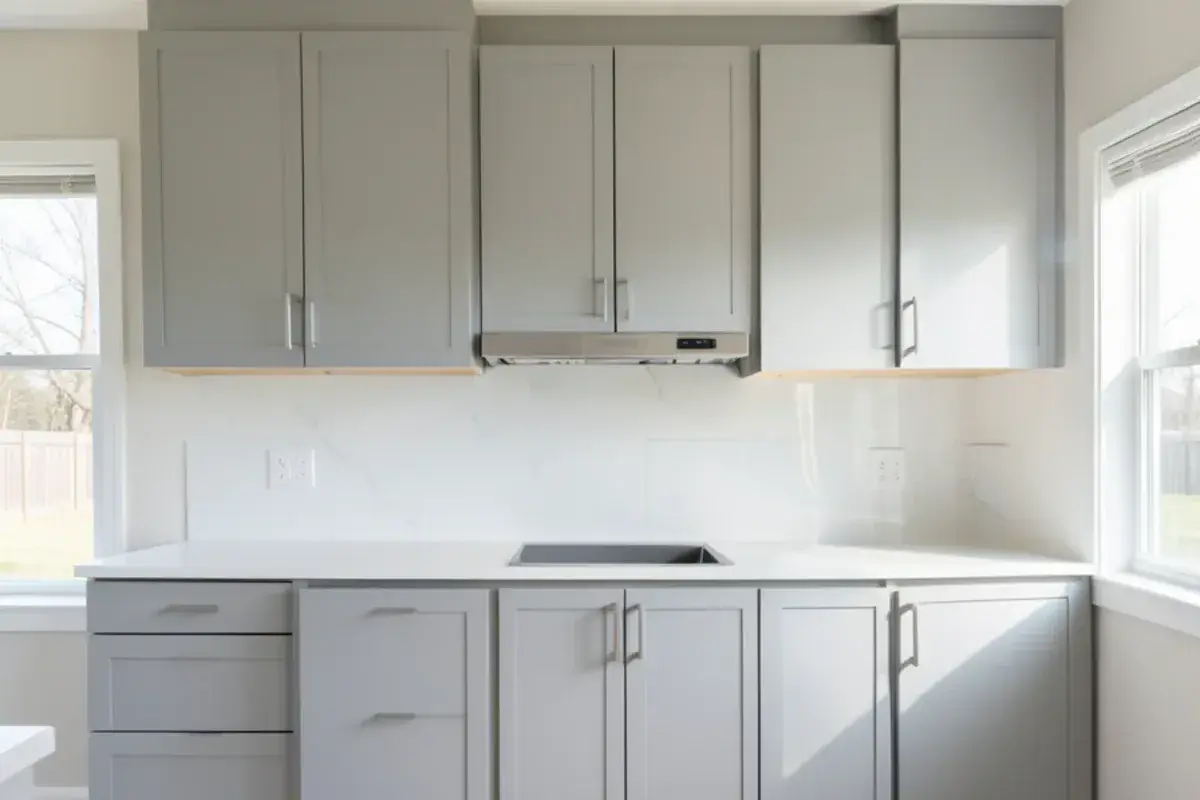
Quartz suits kitchens where consistency matters: modern rooms, long runs where seams should disappear, and homeowners who want exactly what they saw in the sample. Marble-look quartz has improved enormously, though patterns repeat in a way real stone never does.
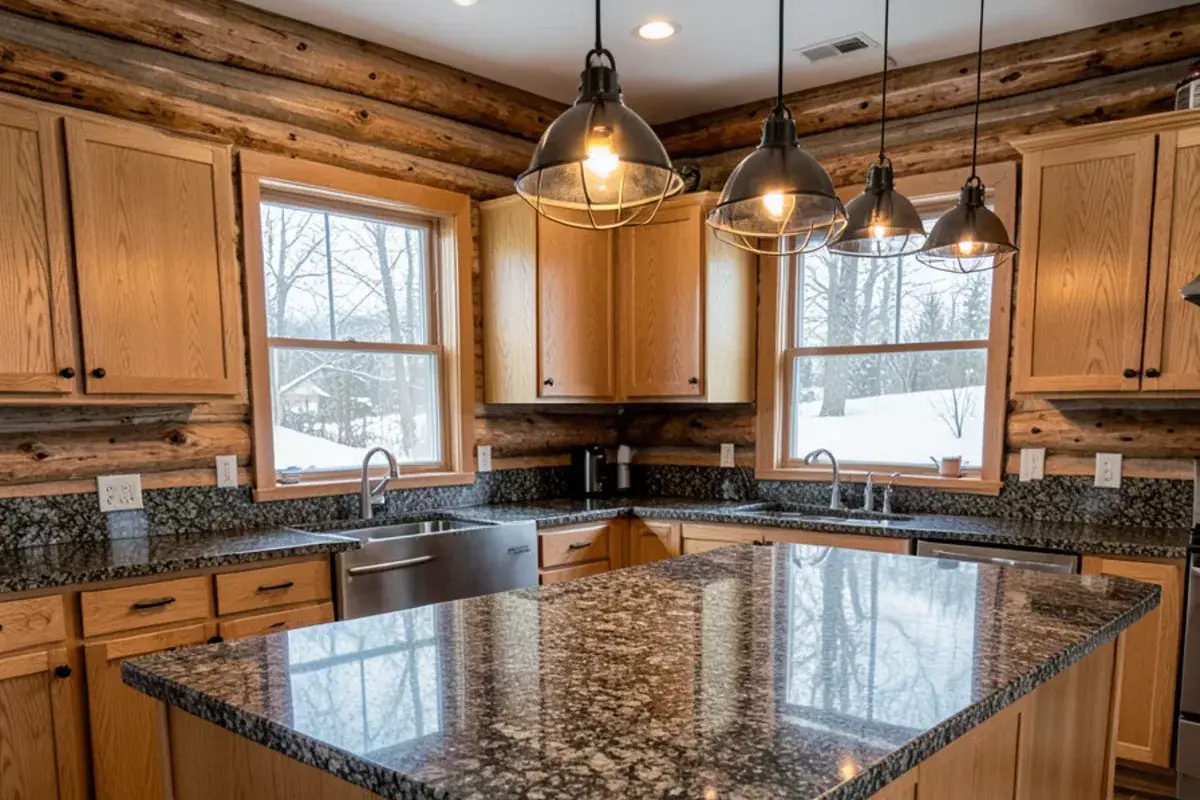
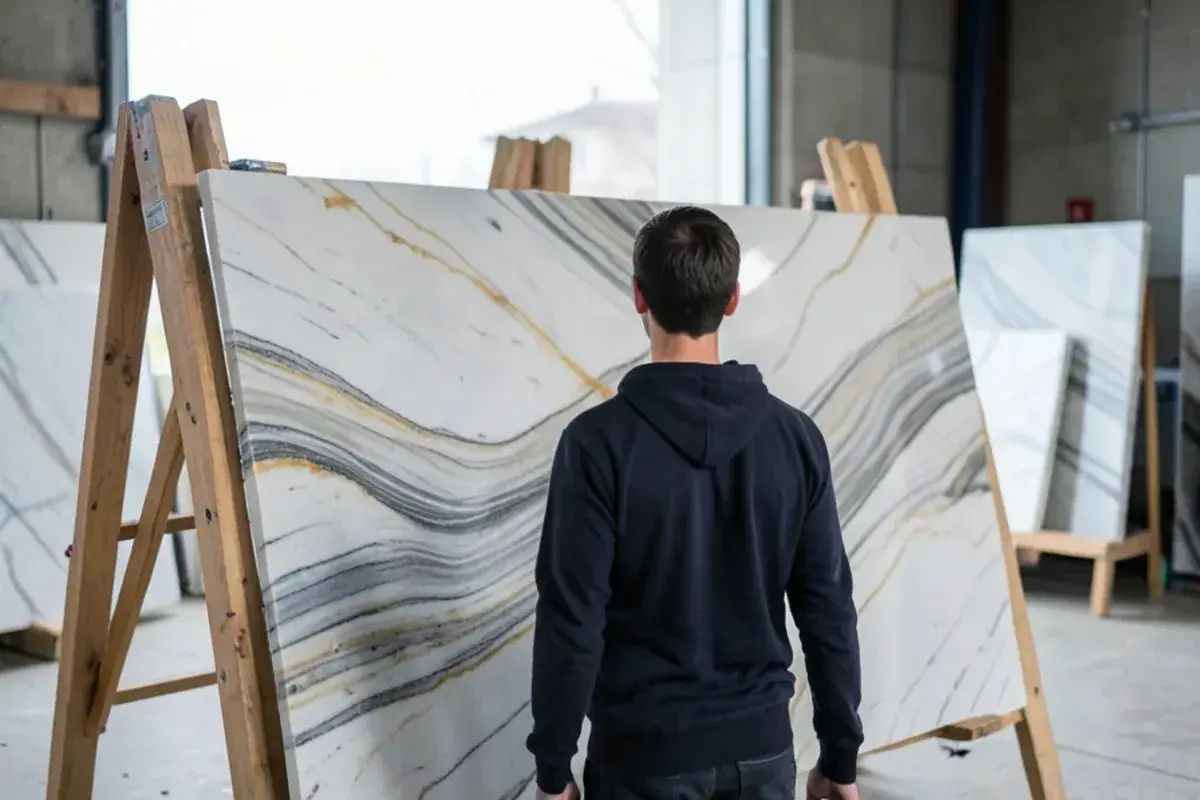
Granite brings depth and movement, from tight speckle to bold veining, and it suits traditional, rustic and lake-home kitchens especially well. Quartzite appeals to people who love the look of marble but want a harder, less reactive surface. With both natural stones, the slab is the product, so choosing the actual slab in person at the stone yard is part of the process.
Choosing by how your household cooks and cleans
- Busy family, minimal upkeep: quartz, for its non-porous surface and predictable look.
- Serious home cook who moves hot pans fast: granite or quartzite, with trivets still within reach.
- Marble lover who wants fewer worries: a tested, true quartzite.
- Budget-focused with a natural-stone wish: an entry-level granite, which can price well against many quartz lines.
- Sunny breakfast nook or outdoor kitchen: natural stone, since some quartz products can fade with long UV exposure.
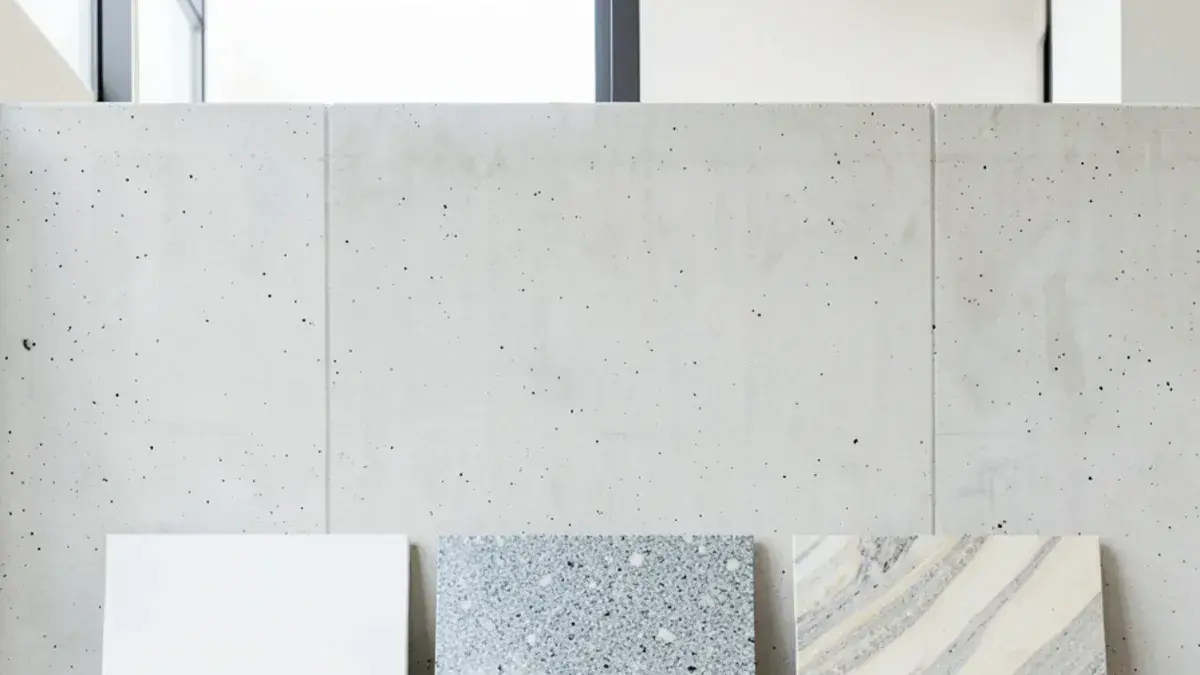
Clients from Ann Arbor to Brighton can see all three together during finish selection, which makes the trade-offs much easier to judge than photos ever do.
Nick on choosing between the three
I have designed kitchens with all three, and I do not have a favorite in the abstract. When Kitchen & Bath Business magazine put one of my kitchens on its cover in October 2020, the centerpiece was a backlit granite island. I chose that stone because it suited that room, not because granite beats quartz in general.
The trade-off I see people regret most is choosing on the sample alone. A four-inch square of quartz is honest about the slab; a four-inch square of granite or quartzite is not. I would rather spend an afternoon at the stone yard with you than have you meet your countertop on install day.
My process is to ask how you live first, then show you materials that fit. If you want zero maintenance, I will steer you to quartz. If you love veining and do not mind a yearly water test, I will take you to see quartzite slabs, and I will ask the fabricator to test a sample before you reserve one.

Nicholas Vanderhovel, CMKBD, CAPS, CLIPP
Owner and designer at Kitchen NV in Pinckney, MI, and a Michigan-licensed residential builder (#2101209269). About Nick
Quartz vs. Granite vs. Quartzite: quick answers
Is quartzite the same thing as quartz?
No. Quartzite is a natural metamorphic stone quarried in slabs, while quartz countertops are engineered from ground quartz bound with resin. The names cause constant confusion at stone yards. Quartzite needs periodic sealing and varies from slab to slab; quartz needs no sealing and looks like its sample. Nick confirms exactly which material is on the order during finish selection.
Which of the three is most heat resistant?
Granite and quartzite tolerate heat better than quartz, because they are natural stones formed under extreme temperatures, while quartz contains resin that can scorch. That said, a trivet is wise on all three, since sudden heat can stress stone and affect sealer. For a kitchen where hot pans come off the range constantly, Nick often suggests natural stone near the cooktop.
Should I pick my exact granite or quartzite slab?
Yes. Natural stone varies so much that a small sample cannot show the veining, color shifts and features of the slab you will actually get. Visiting the stone yard lets you choose specific slabs and see where seams and key veins will fall. During material selection, Nick helps clients review slabs against the countertop layout before anything is reserved.
Does quartz, granite or quartzite add the most resale value?
None of the three wins on resale by itself. Buyers in most of Southeast Michigan treat all three as quality countertops, and condition, color and how the kitchen works around them matter more than the material name. Chipped edges, dated speckle or a scorched quartz spot hurt more than the choice of stone. Nick suggests picking for how you live, in a color that will not date the kitchen quickly.
Pick quartz for consistency and easy care, granite for natural variety across a wide price range, and quartzite for a marble look with real hardness. Whichever you choose, see the actual slab or full-size product before committing.
Seeing the three side by side under your own lighting settles most debates quickly. Kitchen NV's number is (810) 923-8792 if you want help with countertop selection.
Related services and areas