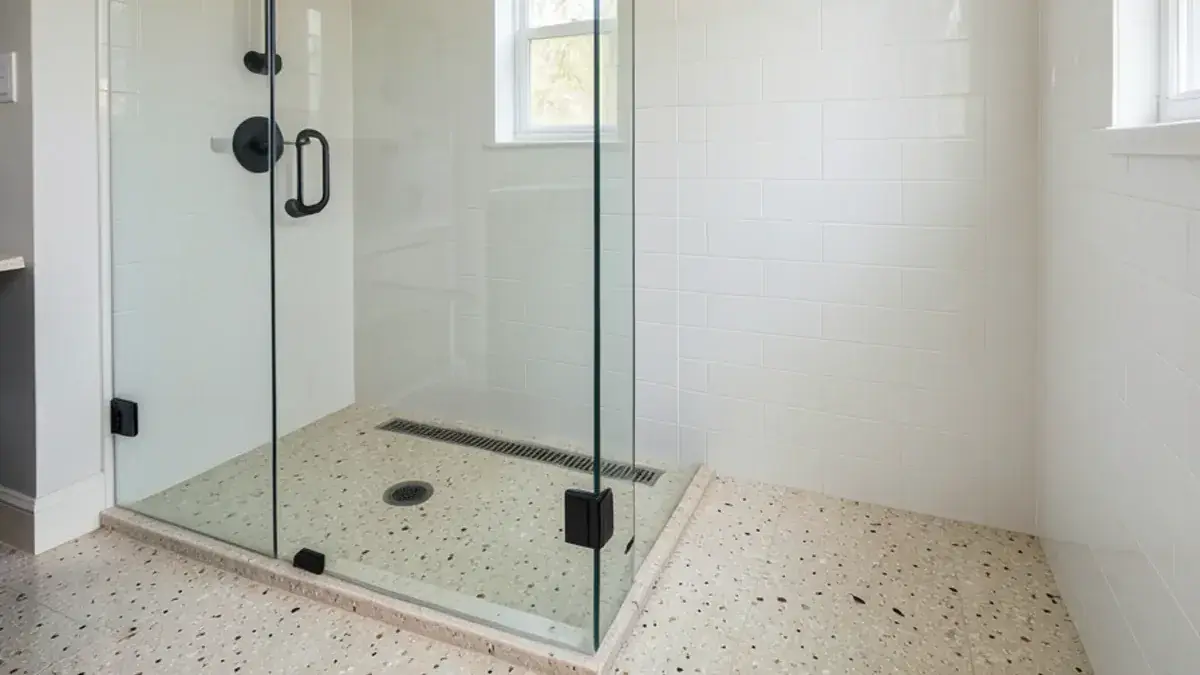
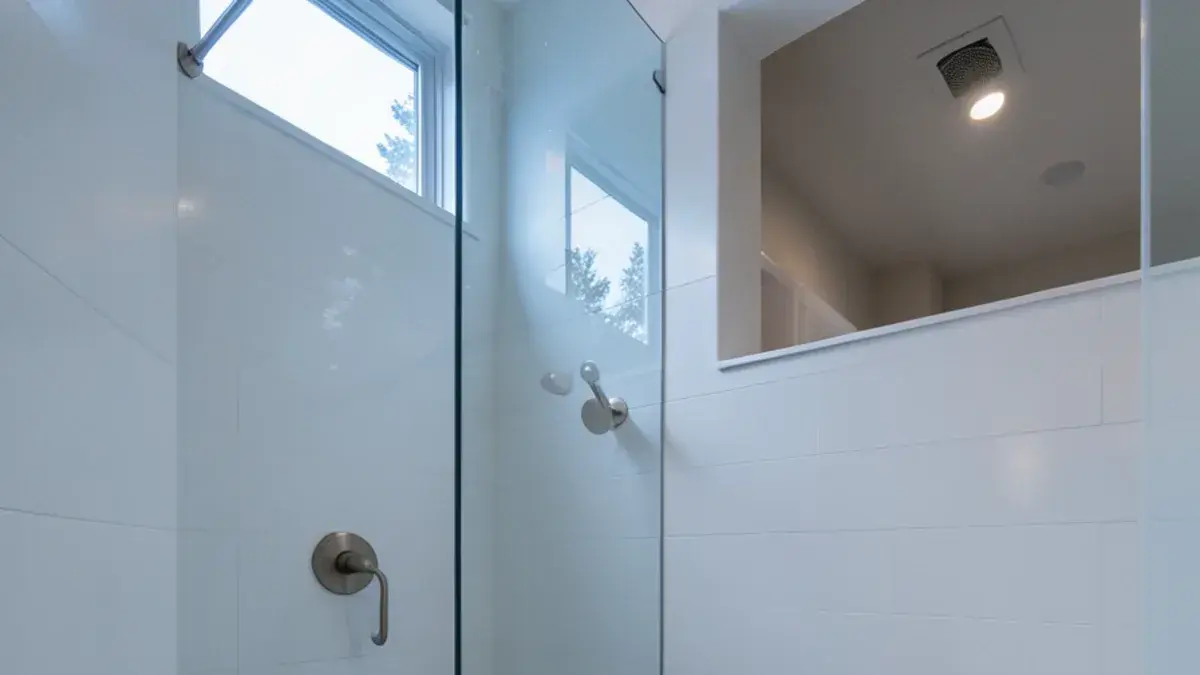
Shower maintenance after a remodel comes down to five habits: let the setting materials cure, seal cement grout once it is ready, squeegee the glass and walls after use, run the exhaust fan long enough to dry the room, and keep the drain free of hair and scale.
Do those consistently and a tile shower looks the way it did on the day the glass went in for years, not months.
Hard well water makes this more pressing in many homes around Pinckney, Hamburg and Dexter. Here is how we advise Kitchen NV clients to care for a new shower, what to avoid, and which design choices make the job easier from the start.
What does shower maintenance after a remodel involve in the first month?
The first few weeks are about patience. Thinset, grout and silicone each need time to cure, and the right waiting period comes from the manufacturer of the product your installer used, not from a general rule. Ask the contractor to leave you the grout type and color name; you will want both for sealing and for future repairs.
Wait for the cure
Hold off on showering until the installer confirms the grout and caulk have cured. Rushing it can wash out fresh grout or leave caulk joints soft.
Remove protective films
Peel any film from fixtures and glass, and clean off construction dust with a damp microfiber cloth before it gets wet and smears.
Seal cement-based grout
Apply a penetrating grout sealer once the manufacturer’s cure window has passed. Epoxy grout and many urethane grouts do not need sealer; confirm which you have.
Walk the punch list
Check that the door swings and seals without dragging, the drain empties without pooling and every corner has a clean silicone joint.
Questions about your own project? Call Nick at (810) 923-8792
Call Kitchen NV in Pinckney, Monday to Friday, 9 a.m. to 5 p.m. Design consultations are by appointment.
- ★ 5.0 on Google (28 reviews)
- MI Residential Builder #2101209269
- CMKBD · CAPS · CLIPP designer
- Serving since 2020
How does hard well water around Pinckney affect a new shower?
Many homes in Hamburg Township and the rural land around Dexter draw from private wells, and well water in this part of Michigan is frequently hard. Calcium and magnesium dry into white scale on glass, chrome and grout. Some wells also carry iron, which leaves orange or rust-brown streaks, especially near the drain and under the shower head.
Cleaning handles the symptoms; water treatment handles the cause. If you have never had your well tested, the county health department can point you to testing options, and the results tell a water treatment contractor whether a softener, an iron filter or both make sense. Treating the water before the new shower is used is easier than removing a year of buildup from a textured tile.

Cleaners for grout, tile, stone and glass
The surface decides the cleaner. Porcelain tile tolerates almost anything, but natural stone and cement grout do not. Acidic products, including vinegar and many scale removers, etch marble, limestone and travertine, and over time they wear down cement grout and the sealer protecting it.
| Surface | Routine cleaning | Avoid |
|---|---|---|
| Porcelain or ceramic tile | Mild cleaner and a soft brush | Abrasive powders on glossy glazes |
| Cement grout (sealed) | pH-neutral cleaner, soft nylon brush | Repeated acids and bleach-heavy sprays |
| Marble, limestone, travertine | Stone-safe pH-neutral cleaner | Vinegar, citrus and acidic scale removers |
| Frameless or coated glass | Daily squeegee, non-abrasive glass cleaner | Scouring pads and razor blades on coated glass |
| Chrome, nickel or matte fixtures | Damp microfiber, dry after use | Abrasive cleaners that scratch the finish |
Silicone, not grout, belongs at inside corners and where walls meet the floor or tub. Those joints flex as the house moves through Michigan’s seasons. When silicone yellows, grows mildew that will not clean off, or pulls away from the tile, cut it out and replace it rather than covering it with a fresh bead.
Why do ventilation and drains decide how long a shower lasts?
Moisture that lingers is what grows mildew in grout lines and peels paint on the ceiling. The International Residential Code, the basis of Michigan’s residential code, requires bathroom exhaust of at least 50 cubic feet per minute for intermittent fans, or an openable window. A fan only helps if it vents outdoors, not into the attic, and if it runs long enough. Leave it on for about 20 minutes after a shower, or let a humidity-sensing switch decide.
Sizing matters as much as run time. The Home Ventilating Institute recommends 1 CFM per square foot for baths between 50 and 100 square feet, so an 80-square-foot primary bath wants roughly an 80 CFM fan, and it suggests a rating of 1.0 sone or less for a quiet unit. The NKBA planning guidelines add practical details: a timer control with settings up to 60 minutes, a separate fan for an enclosed toilet room, and an exterior termination kept at least 36 inches from an operable window or door. A quiet fan matters more than it sounds, because people turn off the loud ones early.
Drains need regular attention too. A removable hair catcher on a center drain, or a linear drain whose grate lifts out, makes weekly cleaning quick. Hard water scale also builds up inside drain bodies and around the small weep holes that let a traditional mortar shower base drain. Avoid relying on harsh chemical drain openers; mechanical cleaning and an occasional enzyme treatment are gentler on the pipes.
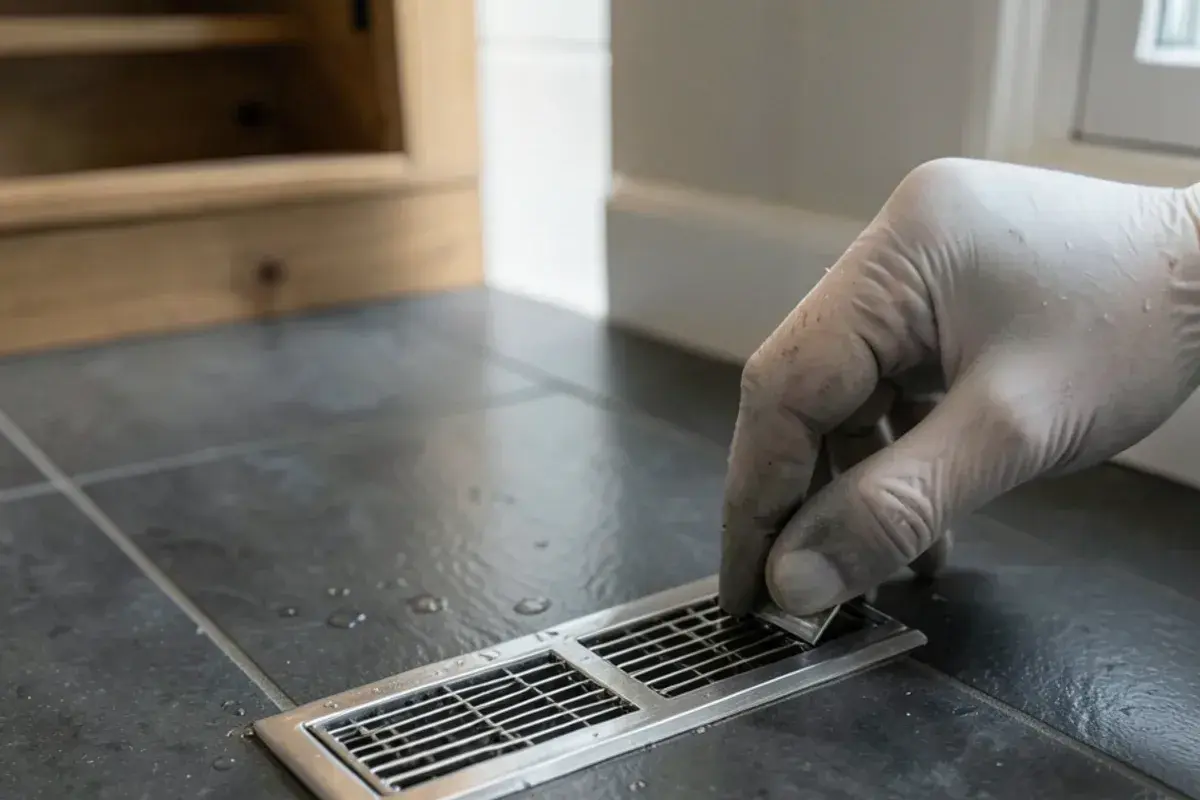
- After every shower: squeegee glass and walls, leave the door open, run the fan.
- Weekly: clear the drain hair catcher and wipe fixtures dry.
- Monthly: clean grout with a pH-neutral cleaner and descale shower head nozzles.
- Yearly: test grout sealer with a few drops of water and reseal if it soaks in; inspect every silicone joint.
Which shower problems need a professional, not a stronger cleaner?
Most of what you see on a new shower is surface: soap film, scale and the occasional mildew spot in a corner. A few signs point to water getting where it should not, and those deserve a call to the installing contractor while the work is still fresh and the warranty terms are easy to find.
- Grout that stays dark for hours after the shower is dry, especially along the bottom row or near the drain, can mean water is collecting beneath the tile.
- A hollow sound or a tile that moves when pressed suggests the bond has failed underneath.
- Cracks running along a change of plane, such as the wall-to-floor joint or around the niche, often mean grout was used where a flexible sealant belonged.
- Water pooling in one area of the floor points to a slope problem rather than a dirty drain.
- A stain on the ceiling below, a musty smell that cleaning does not clear, or loose trim at the valve all deserve a prompt look.
Design choices that make a walk-in shower easier to clean
Care starts on the drawing board. When we plan a walk-in shower, we weigh how each choice will hold up to hard water and daily use: fewer grout lines from large-format tile, a fixed glass panel with less hardware, a handheld wand for rinsing walls, and a niche with a sloped sill so water does not sit. Those decisions are part of every bathroom remodeling plan we draw, and they cost little compared with fighting buildup for years.

How I design a shower around the water it will see
When a client tells me they are on a well, it changes my recommendations. I steer away from finishes that show every spot, I favor fewer grout joints and I make sure the plan includes a fan that actually vents outside. I would rather talk about water treatment during design than have a client discover the problem on their new glass a month after move-in.
I also tell people honestly that no shower is maintenance-free. A squeegee and an open door do more than any product. The showers that still look new after years are the ones where the design made the daily routine easy enough that people keep doing it.
Some choices are honest trade-offs. A factory-applied glass coating makes spots easier to wipe off, but it does not replace the squeegee and it can be damaged by the wrong cleaner. Matte black and brushed fixtures hide fingerprints better than polished chrome, yet hard water can leave a chalky film on them that needs gentle cleaning. I explain both before a client falls in love with a finish.

Nicholas Vanderhovel, CMKBD, CAPS, CLIPP
Owner and designer at Kitchen NV in Pinckney, MI, and a Michigan-licensed residential builder (#2101209269). About Nick
Shower Care After a Remodel: quick answers
How soon can I use a newly tiled shower?
Use it only after your installer confirms that the grout, setting materials and silicone have cured, which depends on the specific products used. Cement grout, epoxy grout and silicone all have different cure times listed by their manufacturers. On Kitchen NV projects, Nick has the contractor give you that timing at the final walkthrough so you are not guessing.
How often should I reseal shower grout?
Test it about once a year rather than resealing on a fixed calendar. Drip a little water on the grout lines; if it beads, the sealer is still working, and if it darkens and soaks in, reseal. Showers used daily by several people, or rinsed with hard well water, usually need it sooner. Epoxy grout does not need sealing at all.
What removes hard water spots from new shower glass?
Prevention works better than removal: squeegee after every use. For spots that build up anyway, use a non-abrasive cleaner the glass manufacturer approves, especially if your panels have a factory protective coating. Avoid scouring pads and razor blades on coated glass. In homes on hard well water around Pinckney, a softener reduces the problem at the source.
Should I install a water softener before remodeling my bathroom?
If your well water is hard or carries iron, treating it before a new shower and fixtures go into service is worth considering. Start with a well water test, then let a water treatment contractor recommend equipment based on the results. We can plan the bathroom on either schedule, but new glass and grout benefit most from treated water.
A new tile shower needs a short, steady routine: cure, seal, squeegee, ventilate and keep the drain clear. In hard-water homes, treating the water and choosing forgiving finishes make that routine far easier.
Want a shower designed around your water and your habits? Kitchen NV’s number is (810) 923-8792; tell Nick whether you are on a well when you call.
Sources
- Bathroom Exhaust Fans — Home Ventilating Institute
- Kitchen & Bath Planning Guidelines with Support Spaces and Accessibility (excerpt) — National Kitchen & Bath Association
Related services and areas