The right home wine storage ideas depend on one question: are you aging wine for years, or keeping bottles on hand to drink in the coming months? Aging calls for a stable environment around 55°F with moderate humidity, which in practice means a cooled cellar or a wine refrigerator.
Bottles you will open soon can live in a wine wall, a bar cabinet or a rack in a cool corner of the house.
Below, Kitchen NV compares the main options, explains the conditions wine needs and covers what it takes to build a real cellar in a Michigan basement.
Which home wine storage option fits how you drink?
| Option | Suitable for aging? | Typical location | Good fit for |
|---|---|---|---|
| Cooled wine cellar | Yes, with a dedicated cooling unit | Basement room or converted closet | Collectors with a growing inventory |
| Wine refrigerator (single or dual zone) | Yes, for its capacity | Kitchen, bar or butler’s pantry | Small collections and serving-ready bottles |
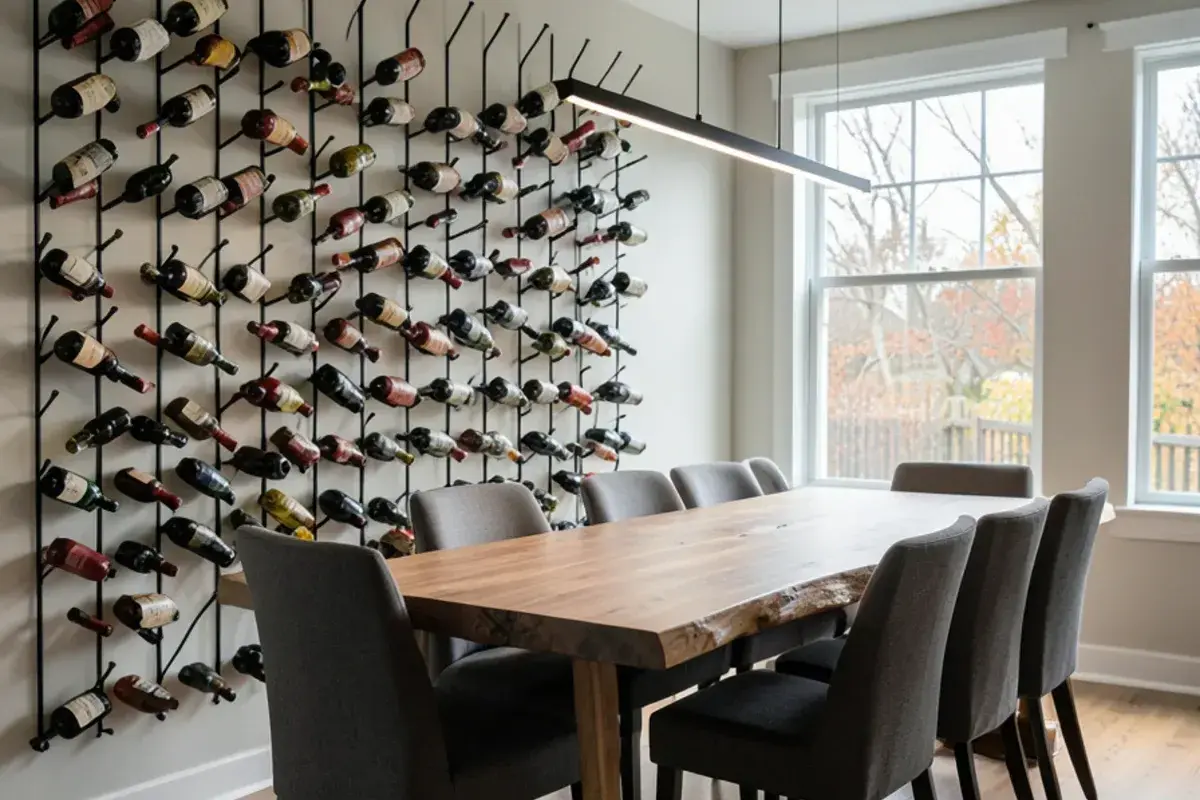
| Wine wall or display racking | Only if the room itself is cooled | Dining room, stair wall, bar | Display and bottles drunk within months |
| Bar cabinet with racks | No, short-term only | Home bar, family room, basement | Casual hosts who keep a few cases |
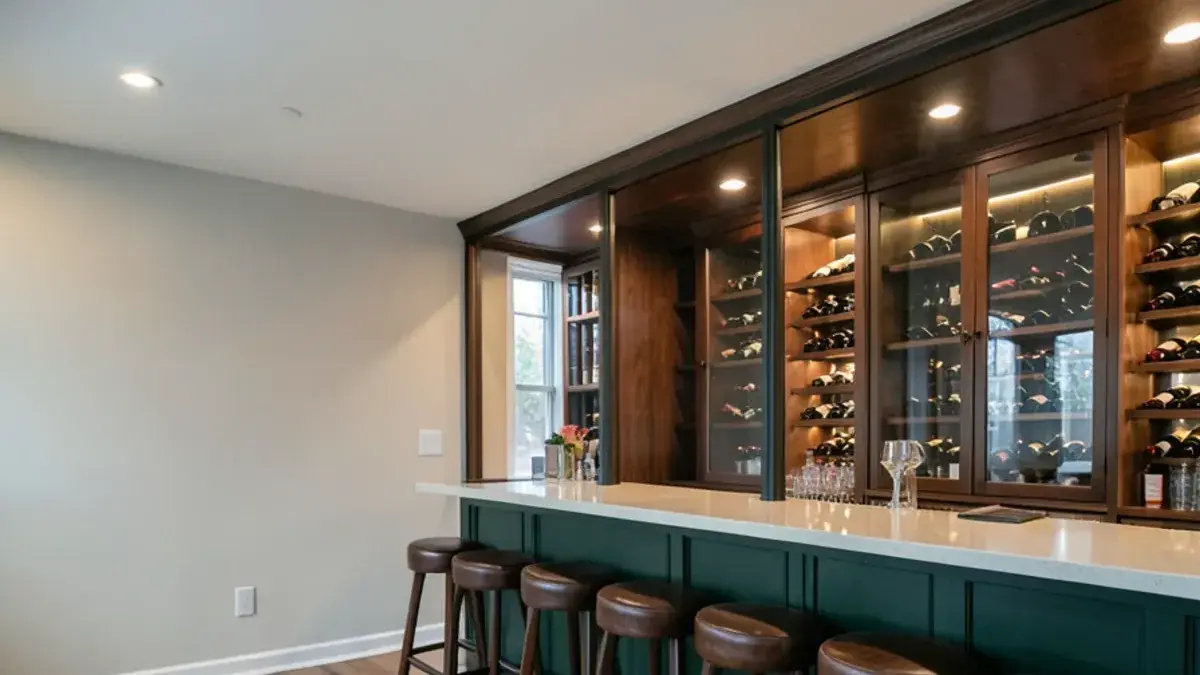
Many households combine two: a refrigerator or cooled closet for the bottles that need care, and open display racks for everyday wine near where it is served. A wine cellar or home bar design can tie both together.
Questions about your own project? Call Nick at (810) 923-8792
Call Kitchen NV in Pinckney, Monday to Friday, 9 a.m. to 5 p.m. Design consultations are by appointment.
- ★ 5.0 on Google (28 reviews)
- MI Residential Builder #2101209269
- CMKBD · CAPS · CLIPP designer
- Serving since 2020
What conditions does wine need for long-term storage?
- Steady, cool temperature. Around 55°F is the commonly cited target. Stability matters as much as the number; daily or seasonal swings push wine in and out of the bottle past the cork.
- Moderate humidity. Relative humidity roughly between 50% and 70% keeps natural corks from drying out without encouraging mold on labels and racking.
- Darkness. Ultraviolet light can degrade wine, so cellars use low-heat LED lighting on a switch or timer and avoid sunlight.
- Little vibration. Keep racks away from laundry machines, mechanical equipment and heavy foot traffic overhead where possible.
- Bottles on their sides. Horizontal storage keeps corks in contact with the wine.
Those targets have more tolerance than people expect. Wine Spectator's storage guide gives a workable range of 45°F to 65°F, with 55°F often cited as close to perfect, and treats anywhere from 50% to 80% humidity as safe, while warning that rapid or frequent temperature swings do more harm than a steady room a few degrees warm. The same guide points out that only a small share of wines benefit from long aging, and most are meant to be opened within a few years of release. That is the real sizing question: how much of your collection truly needs a cellar.
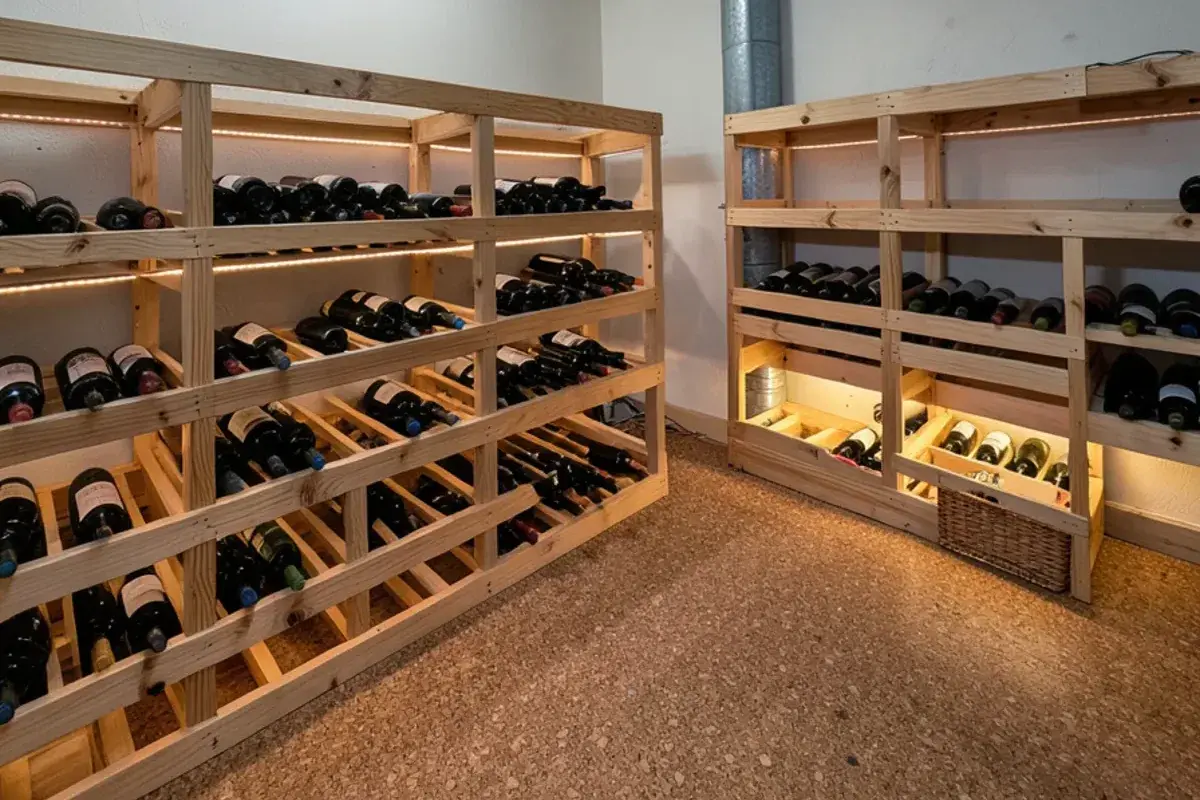
How do you build a wine cellar in a Michigan basement?
A Michigan basement is cooler than the rest of the house but not reliably cellar-ready. Temperatures and humidity drift with the seasons, and a finished lower level is heated like any other room. Real cellar conditions take an enclosed room, insulated and sealed, with cooling that serves only that space.
Choose the room
An interior corner along a foundation wall, away from the furnace and water heater, gives the cooling unit the least work.
Insulate and control vapor
Walls and ceiling are insulated and fitted with a vapor retarder on the warm side, so moisture does not condense inside the wall cavities.
Seal the entry
An exterior-grade insulated door, or insulated glass, with weatherstripping and a bottom seal keeps conditioned air inside.
Size the cooling system
A through-wall, ducted or ductless split cooling unit made for wine rooms is sized to the room, insulation and any glass. Household air conditioning is not a substitute.
Plan racking and light
Racking is laid out to the bottle count with room to grow, and LED lighting keeps heat and UV low.
Glass walls look wonderful but add heat gain and can fog at the edges, so they increase the cooling capacity required. The cellar and its mechanicals fit into the broader basement remodel plan: electrical circuits, a condensate drain for some units and access for service.
What insulation, vapor control and finishes does a cellar room need?
Cellar builders publish fairly consistent construction targets, and they line up with what a basement in southeast Michigan needs to stay stable through a humid July and a dry, heated January. The table summarizes guidance from a wine-rack manufacturer's construction guide and This Old House; your cooling-unit maker's installation manual has the final word for the unit you choose.
| Component | Typical target | Why it matters |
|---|---|---|
| Wall insulation | At least R-19; 2x6 framing leaves room for it | Limits the heat the cooling unit has to remove |
| Ceiling insulation | R-30 | Warm air from the heated floor above collects at the ceiling |
| Vapor control | 6-mil poly on the warm side, or closed-cell spray foam | Keeps warm, humid air from condensing inside the walls |
| Wall board | Moisture-resistant drywall, every penetration sealed | Air leaks around boxes and switches undo the insulation |
| Door | Exterior-grade, weatherstripped, with a threshold and sweep | Doors and glass exchange more heat and moisture than walls |
| Floor | Tile, stone or sealed concrete; no carpet | Spills and damp air make carpet a mold risk |
| Lighting and paint | Surface or track LED, no recessed cans; low- or zero-VOC paint | Less heat, fewer air leaks and no odors near the corks |
This Old House suggests a ductless mini-split on an exterior wall as one straightforward cooling route, and notes that a separate dehumidifier may be needed in a cold climate where cooling runs less. In a Michigan basement that is often the case in shoulder seasons, so we plan an outlet and a drain location for one even if it is not installed on day one.
Wine walls, bar cabinets and beverage refrigerators
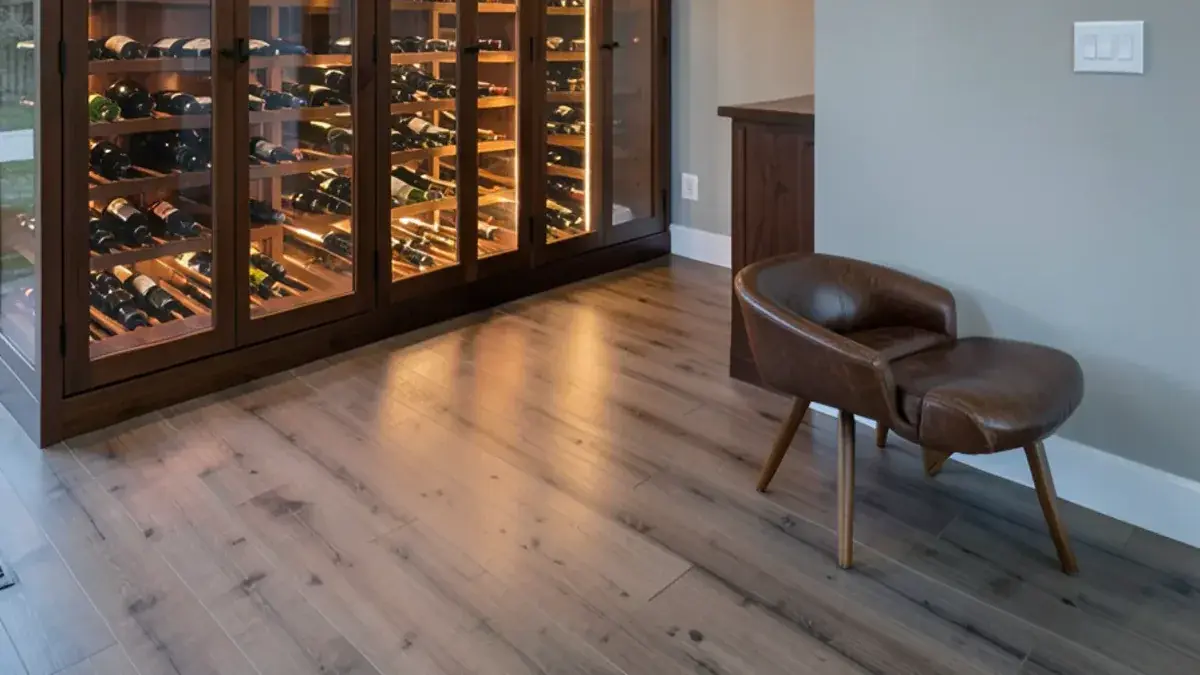
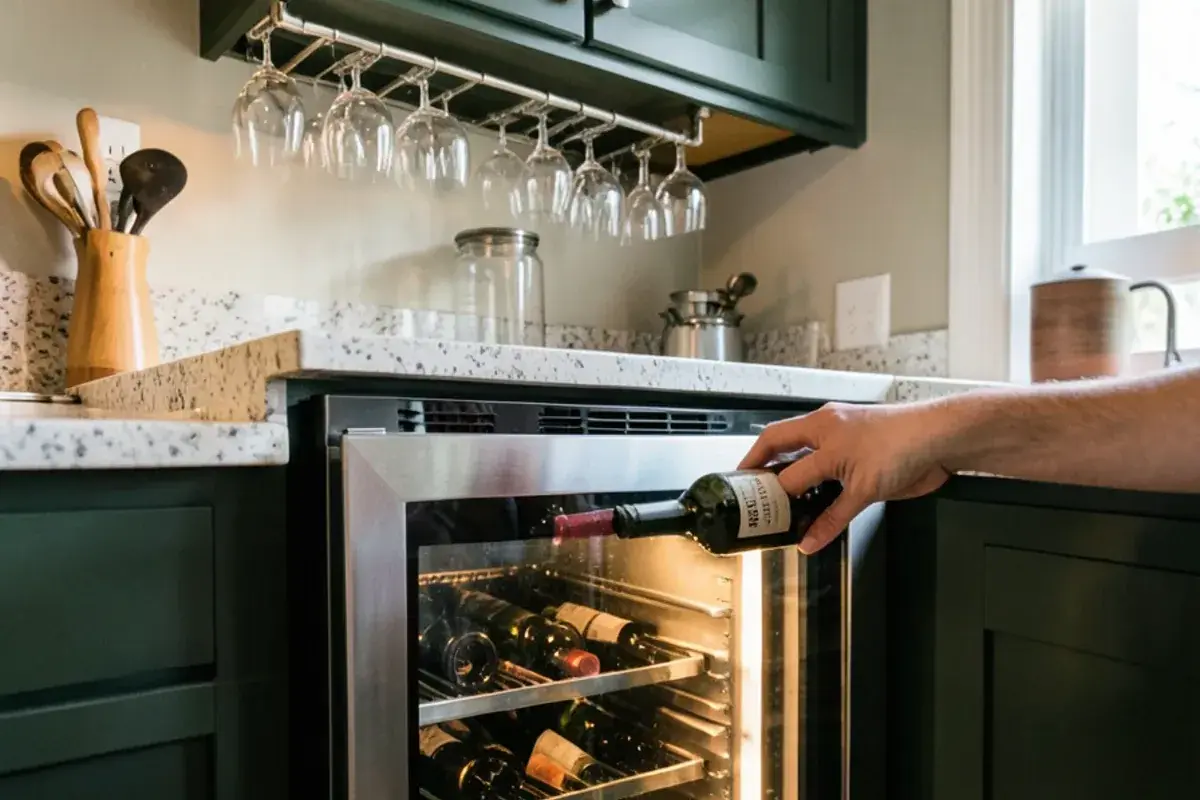
Not every collection needs a room. A wine wall along a stair or dining room puts bottles on display, often label-forward, and suits wine you plan to drink within months. Undercounter wine refrigerators hold a few dozen bottles, and dual-zone models keep reds and whites at different temperatures. A tall built-in column can hold far more in a kitchen or butler’s pantry.
Bar cabinetry ties it together: X-shaped cubbies or individual bottle racks, stemware storage, a drawer for openers and corks, and a counter for pouring. Custom built-ins let a bar fit around a window, a beam or the space under a stair rather than forcing standard cabinet sizes.
Wine storage in Brighton Township and Ann Arbor homes
North and west of the city of Brighton, Brighton Township houses on big lots, including those around Woodland Lake, frequently sit over full basements with room for a dedicated cellar beside a bar or media area. Many older Ann Arbor homes, Burns Park and Old West Side among them, have low or crowded basements instead, where a converted closet, an under-stair cellar or a wine refrigerator column in the kitchen can make more sense than a full room.
How I size wine storage for a client
I ask how many bottles you own today, how many you buy in a typical year and how long you keep them. A collector holding cases for a decade needs a cooled room. Someone who keeps a few dozen bottles for dinners needs good display and a refrigerator, and would be paying for capacity they never use with a full cellar.
I always design for growth. Collections expand, and racking is far easier to plan once than to extend later. I also put the cooling equipment where it can be serviced, because a cellar is only as good as the unit keeping it at temperature.
Glass is the trade-off I raise most often. A glass front or a full glass wall turns the cellar into the centerpiece of a lower level, and clients love it. It also adds heat gain, can fog when the room outside is humid, and usually means a larger cooling unit. A solid insulated door with a glass panel is a middle path that keeps the view and the efficiency.

Nicholas Vanderhovel, CMKBD, CAPS, CLIPP
Owner and designer at Kitchen NV in Pinckney, MI, and a Michigan-licensed residential builder (#2101209269). About Nick
Wine Storage at Home: quick answers
What temperature and humidity should a home wine cellar have?
Aim for a steady temperature around 55°F and relative humidity roughly in the 50% to 70% range. Stability matters more than hitting an exact number, so a dedicated cooling unit sized to the room is the norm. Michigan basements drift warmer in summer and drier in winter, which is why Nick plans insulation, a vapor retarder and a sealed door for every cellar.
Can I store wine in an unfinished Michigan basement?
For bottles you will drink within months, a dark, cool corner away from the furnace is usually fine. For long-term aging, seasonal swings in temperature and humidity make an unconditioned basement unreliable. A wine refrigerator or a small insulated cellar with its own cooling unit gives the stability that aging requires, and can be part of a larger lower-level finish.
Is a wine refrigerator enough instead of a cellar?
For small collections, yes. Undercounter units hold a few dozen bottles, and full-height columns hold much more, with dual-zone models keeping reds and whites separate. Once a collection outgrows refrigerator capacity, or you want a room to display and browse it, a cooled cellar becomes worth considering. We plan either one into the cabinetry during design.
How much insulation does a basement wine cellar need?
Published cellar guidance commonly asks for R-19 or more at the walls and about R-30 overhead, with a vapor barrier on the warm side or closed-cell spray foam doing both jobs. The ceiling matters most in a Brighton Township or Ann Arbor basement because the heated living space sits right above it. Nick confirms the targets against the cooling unit's requirements.
Match the storage to the drinking: refrigerators and cellars for wine that needs care, wine walls and bar cabinets for bottles that will be opened soon. A real cellar is an insulated, sealed room with its own cooling, and it is worth designing properly from the start.
Planning a cellar, wine wall or home bar? Call Kitchen NV at (810) 923-8792 and tell Nick roughly how many bottles you keep.
Sources
- 7 Wine-Storage Basics You Need to Know — Wine Spectator
- Wine Cellar Design Guide: Construction — Wine Racks America
- How to Turn Your Basement Into a Wine Cellar — This Old House